 Mike Redwood
November 13, 2024
The most beautiful word in the dictionary
After a visit to the wonderful Silk Roads Exhibition in the British Museum, it is impossible to underestimate the value of trade in progressing all aspects of society. From human wellbeing and cultural advancement to increasing wealth, trade has played a fundamental role.
For a thousand years, the Silk Roads transported goods, technology, ideas and understanding from Japan to Morocco through Korea, China, Central Europe, the Sub-continent, the Middle East, Europe and Africa. Horse transportation was possible because of all the saddles, reins, boots and satchels involved. Leather has always been ubiquitous, essential, beautiful and democratic; and has always been traded globally.
Today, the U.S. is central to the leather trade. It has the one of the largest supplies of high-quality hides in the world and the biggest market for finished products. Major tanning countries such as India, China and Italy rely on raw or semi-processed U.S. hides, just as some customers seek out Bangladesh kidskins or Ethiopian hairsheep to meet specific needs.
It was always this way with leather. Balancing local supply with demand rarely works since the hides and skins are not the determining reason for keeping livestock. Additionally, special leathers such as Russian (requiring birch bark) and Moroccan have found big export demand.
Trade tariffs
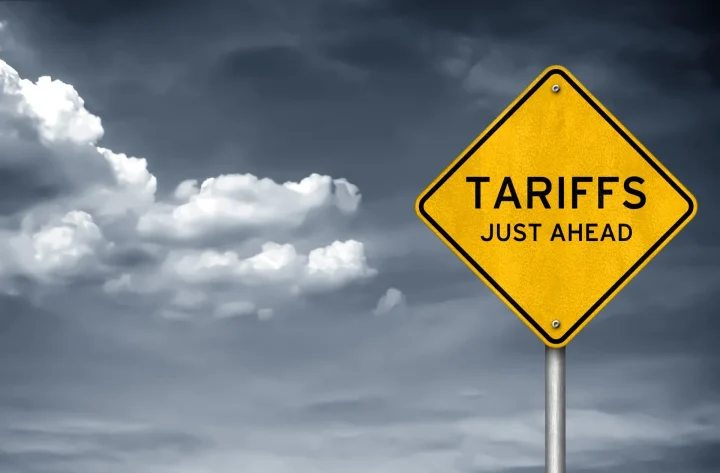
The 45th President of the United States, Donald Trump, introduced multiple tariffs, marking a transition away from the former free trade ideology born out of the writings of Adam Smith. The new protectionist system proposed the tariff “warriors” in the new administration were moderated by the traditional supporters of free trade, who were, for example, able to stop tariffs on German car imports.
With moderating voices gone and a big election win, President Trump is appointing a better organised team to carry out his pledges. The leather industry must quickly get all its trade bodies, national, regional and international prepared to fight for leather in their countries and internationally. There will be many implications, some of which will be hard to anticipate.
Industry harmony
It is good that the production of the leather manifestos for the last few COP meetings have pulled the industry harmoniously together and provided access to the political classes and others in the legislative area. Regardless of the detail, tariffs will raise prices and slow the growth of GDP.
Deciphering what Donald Trump really meant when he said to Bloomberg, “to me, the most beautiful word in the dictionary is tariff”, is not straightforward. He has been clear that he will at once put tariffs on EU imports and the EU is already working on retaliation. But, with all their other problems, the last thing the EU automotive industry needs is this. The German automotive companies have little spare capacity in their American factories. European automakers are big customers of leather. There are only a few weeks to find solutions.
Previously, a lot of goods escaped U.S. tariffs by using third countries such as Vietnam and Mexico, but these tricks have now been identified by the Trump team. Action against Mexico will impact footwear brands such as Nike, New Balance and Adidas, along with less famous ones such as Tecovas whose products use more leather and will have fewer alternative options. Mexico is complicated as it will be involved in Trump’s immigration promises; tariffs could become a bargaining tool. The consensus suggests the U.S. will start with extremely high tariffs and reduce them as agreements are reached.
U.S. – China trade
China is expecting a 60% tariff and is almost certainly planning devaluation as an offset. The U.S. trade deficit with China shot up last month, caused by front loading to avoid future tariff costs, and this is only likely to provoke faster action. But the technology sector and other areas of interest to “super genius” Elon Musk add a level of unpredictability. With retaliatory tariffs likely to hit the agricultural sector, hides and leather in its various forms will certainly get impacted, so lobbyists will be busy.
The theory behind the tariff thinking is that exports are being used as a ploy, and not in the way anticipated by the early economists like Smith. Hence, we also have talk of a 20% global tariff, passing a “reciprocal trade act” to put tariffs on trading partners equivalent to theirs on the U.S. and of replacing federal income tax with tariff revenue. My economics tells me this latter proposal will not work but it is seen in a bigger picture of isolating China’s economy while increasing U.S. middle class incomes, among other things. Since the constitution does not allow a third term – and the votes are not there in Washington or the states to change this – the 47th President looks likely to take the risk to see how it turns out.
We are likely to see many countries reviewing their longer-term future and seeking out new trade partners, moving away from the U.S. and probably the EU which, although rich is aging fast without immigration. That could prove a valuable move for many emerging economies for whom the West has become a less reliable partner, but in doing so they enter a less certain world. Russia travels through a mercenary military who barter “security” for access to resources and China’s more benign approach seems to constantly leave countries with unaffordable debts. Outside of Tamil Nadu, India struggles to understand manufacturing in my opinion.
Any determined move away from Adam Smith and his Wealth of Nations should not forget his more important book The Theory of Moral Sentiments, where he declares that no economic system can exist without trust and shared moral values. The new American administration must move our society forward with this aspect of Adam Smith in mind. Adam Smith wrote at the time of family businesses, in which part of their integrity was their responsibility to their local community. His approach to following the law and fulfilling your societal responsibilities fits well with the leather industry. We should be supporting those who lobby for leather by ensuring we set a good example.

Michael Redwood
Leather chemist, writer, and advisor on responsible leather manufacturing and material strategy. This article was originally written for ILM.