 Mike Redwood
December 11, 2024
The horsepower of leather
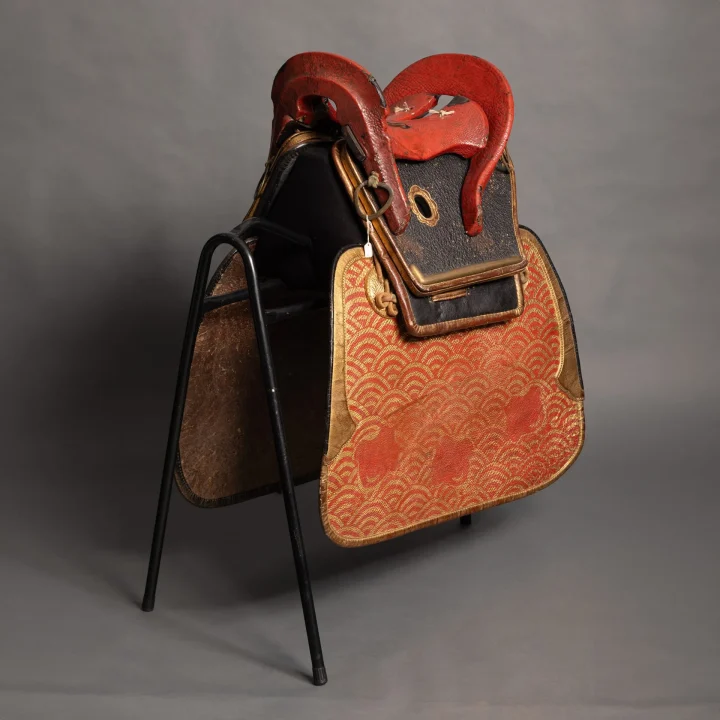
I recently read that the oldest leather saddle known was found in China and is about 3,000 years old. Although the horse appears to have been around on the planet for a few million years, it was not until about 4,000BCE that it was domesticated by the pre-Yamnaya peoples on the Eurasian Steppes. The horses were first kept for winter meat and later used for riding.
Archaeologists have deduced from the teeth of skeletons found in Kazakhstan that some form of bridle was in use around 3,500BCE and, if so, there were probably associated reins made of braided raw hide. At first, riders went bareback, perhaps with some cloth or felt tied round underneath with a primitive girth. Initially, horses would be controlled with a simple raw hide rope tied round its neck.
Human development
Climate changed during the early planet evolution created outstanding grasslands in the great Steppes of southern Russia and Kazakhstan. They were perfect for horses and the human use of some of them. Horses were to be one of the single most important elements in human development, not losing their significance until the early decades of the 20th century with the arrival of the internal combustion engine.
When the leather industry talks about leather as a material that has guided the evolution of society over the millennia, its role in making the wider use of horses possible was clearly a major element. It is a single area of use that we should never overlook, although I have been unable to uncover any figures of the share of leather that equine leathers of all sorts held over time.
This brings us to a people called the Scythians, based out of Southern Siberia from around 900BCE until 200BCE, who were one of the first to make extensive use of saddles. Riding long distances bareback was uncomfortable and a substantial support between horse and rider was required. Rudimentary saddles were invented. Crossing from Mongolia to present day Hungary would take a summer and we are now learning more about the Scythians as increasing numbers of their graves are studied. The buried remains have conserved organic matter including large numbers of articles made with leather.
Early saddles formed a padded barrier between the rider and the horse. They started simple but soon became decorated and more elaborate. The Scythians were a ferocious nomadic warrior tribe. They built a new type of extra powerful bow and with this their mounted archers gained a formidable reputation. They buried horses with them in their large burial mounds along with saddles, bridles and halters. They developed them all to be durable, functional and light: as well as comfortable for the long distant riding between battles. There is some evidence they might have created leather stirrups to help stability when firing.
Leather use in the equine system
With whips, saddle bags and additional items, sometimes called “tack”, over and above a saddle, the amounts of leather involved in the wider equine technical system were immense. Even more so when horses are used to pull carts, coaches or even barges. And later, in certain countries, ploughs.
So, through the following millennia, the sophistication of the use of horses was to expand greatly, helped by the introduction of the saddle tree around 200BCE, which spread the weight of the rider better across the horse’s back and extended the work it could do in a day.
A general of China’s Han dynasty, Ma Yuan, once said that “if the power of the horse is allowed to falter, the state will totter to a fall”. No wonder so much effort has been put into breeding as well as the highly technical specifications of every element of the various leathers used in the associated equipment. Stretch, durability and flexibility all counted as failure could be very costly and sometimes life threatening.
In his book Raiders, Rulers, and Traders, David Chaffetz writes that the Silk Road would be better called the Horse Road, because horses were the true strategic commodity of the time. Certainly, they were bought and sold for bolts of silk with more silk required in payment for the horses that could carry more or bigger saddle bags.
As horses were bred bigger and stronger to pull chariots and carry knights in full armour, we got the Shire horse type breeds, which have given us “Shell Cordovan” leather. Rare now, and with limited raw availability, this was at first a tough military and industrial leather before becoming a luxury item.
It is clear that no other animal has made such a huge impact on human history: and we can say the same for leather as by far the most significant material. They two have been together for more than three millennia of human advancement and empires across the globe and through time have been dependent on them both.
The horse disappeared almost in the blink of an eye and the leather industry has had to battle to keep that sector of tanneries open and the skills involved in the handwork alive. But the horse served the military, industrial and agricultural needs of society as well as the transport and recreational needs of rich and poor. Together with leather, it dominated our lives.
If oil is to end its role in society by 2050, what will be next? Leather has battled with much more fragmented markets since the era of the horse, with even leather use in footwear shrinking fast. It is fair to say we never gave enough credit to the horse, and that we need to search fast for a replacement relationship for leather.

Michael Redwood
Leather chemist, writer, and advisor on responsible leather manufacturing and material strategy. This article was originally written for ILM.