 Mike Redwood
July 17, 2024
The addiction economy
There is a little-known organisation called SocietyInside that likes to help individuals and politicians understand ethical choices. It is headquartered in London but works internationally and has a subsidiary organisation called The Addiction Economy. When the UK changed government a few days ago, Director Hilary Sutcliffe wrote to the newspapers to remind the government that the main causes of preventable death in the UK are cigarettes, unhealthy and ultra-processed foods, alcohol and gambling. She highlighted what should be addressed to reduce the strain on society’s resources.
The five drivers of this “addiction economy” are addictive product design, inescapable availability, predatory marketing, disinformation and undermining political action. It fits precisely with the position around diets, livestock and leather.
The leather industry has taken a determined line on matters that we once called Corporate Social Responsibility. While addiction is not an area of concern, apart from to some poor practices in outlying parts of the world, Sutcliffe’s excellent white paper guides us around the wider issues of consumption and corporate misbehaviour. Predatory marketing, in particular very low pricing, has already sucked some tanners into commodity leathers.
The current task in which the leather industry is engaged is to persuade consumers to buy less and to buy better. In times of real scarcity this might not be a problem, but creating an understanding of shortage in an age of consumer abundance is hard.
The crisis created by plastic
In the world of materials, the problem that has arisen is the danger of plastics. What we thought was a useful material for society is now bringing us to a crisis point. Some of the key issues are:
- Plastics are petrochemicals with a big production footprint
- Their working life is surprisingly short
- They do not biodegrade at end-of-life
- They are very hard to recycle, and mostly impossible to recycle a second time
- They take thousands of years to biodegrade
- They easily produce microplastics in huge quantities.
The white paper highlights the dangers associated with deliberate “low pricing and ubiquitous marketing and availability of products”, all of which fit these petrochemical fibres and materials. It continues: “’Greenwashing’ or ‘CSR-washing’ of their activities as part of marketing” is something we have seen frequently with false scientific comparisons with leather and “vegan leather.”
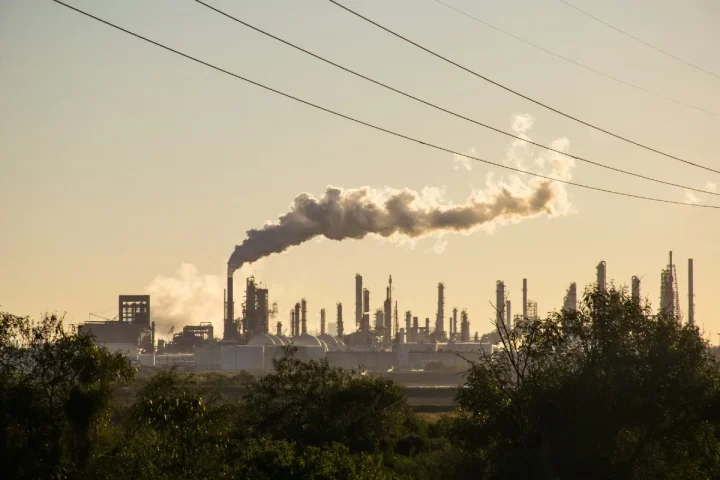
We now know the fossil fuel industry is undertaking a major campaign to promote the wider petrochemical sector. Plastics constitute 50% of petrochemical demand and S&P Global Commodity Insights forecast plastic demand to nearly double by 2050. The IEA says they will be the “single largest contributor” to oil demand growth in the next five years as oil use in other sectors declines.
The white paper points to two other areas. The first discusses “disinformation”, which is about a communication policy intended to confuse, distract, divert attention and mislead citizens, media, policy makers and the law. The second is the undermining of political action through lobbying, disinformation and donations to prioritise corporate interests over the public interest.
Following this approach, the whole battle against livestock over the last 30 years has been fought with funding from the fossil fuel industry as ferociously as it has from animal rights bodies. To blame cows and methane and deflect the view from CO2 emissions from fuel proved easier than expected, as it came to offer “the one simple area” where a citizen can take immediate action to save the planet.
It is therefore vital that the leather industry uses all of its limited resources to maintain and increase the communications that got underway a few years ago. We know it is not enough. We know that most companies do not yet feel sufficiently strongly to offer support funding, but we must fight on with the little we have. From columnist items the message of circular leather that lasts a long time is slowly percolating its way through; leather design competitions are proving very popular with the young.
COP manifestos
The manifesto’s published in advance of the last two COP summits played their part in this, in particular highlighting the value of natural fibres, such as leather, cotton, wool, mohair, alpaca, silk, hemp and mycelium. All play their part in reducing the carbon footprint of materials and the depletion of the planet’s limited resources. Leather avoids the waste of an unavoidable byproduct and leads to the production of long-lived and readily disposable products, which can help limit the harm caused by fossil fuel-based synthetic materials.
This year, COP29 starts on November 11, 2024, in Baku, Azerbaijan – another petrochemical state whose motives may be opaque. So, producing another manifesto this year will be more than worthwhile and getting it out early would be useful. Then, everyone in the industry can get it to their press and political contacts, even from individual worked level. And hopefully the industry will find the opportunity to be well represented at the event itself, with reasonable reporting on the wide variety of sessions relevant to leather from fashion to agriculture to food and more.
We must fight the lobby groups influencing the choices we make as consumers and the materials used in the products we buy. We must continue to fight the behaviour of low pricing, misleading communications and heavy lobbying and fight for durable products, and items that can be used many times, repaired and refurbished, and last for years. The manifestos say it all. We must keep repeating it until all the world truly gets the message.

Michael Redwood
Leather chemist, writer, and advisor on responsible leather manufacturing and material strategy. This article was originally written for ILM.