 Mike Redwood
December 4, 2024
Should the city state make a return?
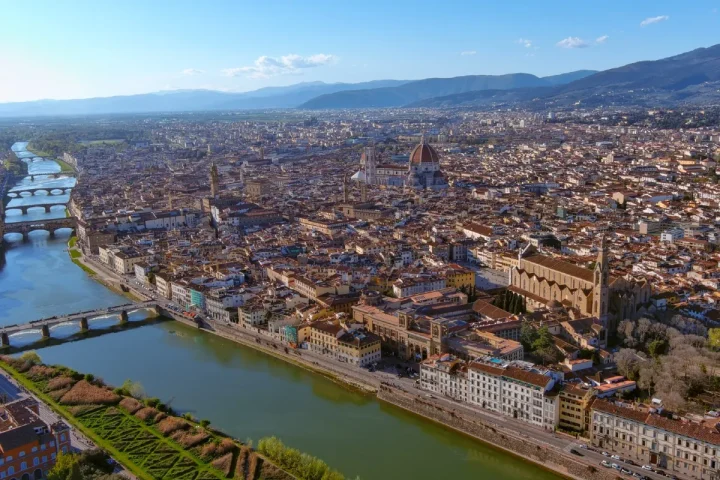
Will the city state be taking a more dominant role in society? We often only think of them in terms of Ancient Greece – Athens and Sparta, or later Florence and Venice in Europe – but there were famous city state cultures ranging from the Mixtec city states in Mexico to the Malay city states in Indonesia and from the Viking city states in Ireland to the Swahili city states in Kenya and Tanzania.
The question is being asked at a time when nation states are becoming overwhelmed by the speed of the digital economy and the realities of a borderless world. Nation states are finding their power and ability to control events and force change is increasingly limited.
It was only the trend to prioritise stakeholder capital and sustainability that stopped the city becoming a new unit of study on business courses. But current disruptive thinking may hurry this back. Simple matters such as the lack of progress at COP29 and the failure to achieve a plastic treaty in South Korea are examples. Many cities are on waterways susceptible to rising sea levels, or in other locations threatened by the steadily rising impacts of climate change. Cities manage waste collection now but will be likely to deal with triple the current volume of plastic by 2060.
This could be the future equilibrium of life
Modern city states should not be confused with just Singapore, Monaco and the Vatican. More relevant cities will include large areas of the surrounding countryside and play a significant role in the region’s religious, political, economic and cultural life. In his book Population 10 Billion, Danny Dorling wrote of cities and their “hinterland” expanding to encompass the global population. Parcelled up into 32 city states, the nine billion global inhabitants expected by 2045 would exist in 280 varied cities. His calculations showed that the world would peak before reaching 10 billion and, with not too much change beyond better logistics and less waste, there will be no problem feeding everyone. So, this could be the future equilibrium of life.
Such city states look best placed to handle these situations along with water supply, drainage, energy, local transport, health, sanitation and the myriad other issues a community needs, as well as to be able to fit into an international, highly connected world. Incredible resilience is fundamental.
The hinterland will require good local connections with the city and a mix of manufacturing and agriculture should evolve. Food supply will be centred around achieving self-sufficiency within the limits of climate and soil and ought to follow a regenerative approach to maximise availability of fresh meat and vegetables. Greater diversity of crops suited to current and future climates is already being examined.
Cities have always been centres for culture, innovation, technology and finance and some manufacturing will match these while others will align with the modern-day location theory. The purely mercantile approach of building mass through cheap labour or other means to push exports into the U.S. and the EU will not survive the current realignment and long-term world demographics also ensure this.
Manufacturing and agriculture
Cities will establish manufacturing and agriculture for local and regional trade. Growth areas such as Africa, where historic colonial infrastructure ignored local and inter-country trade as it rushed raw materials to the coast for export, should take note. The future should be very different.
All of Dorling’s 280 cities should have livestock and tanneries. It does not mean they will all have automobile factories or global luxury goods brands. Not every city will be making space rockets, steel or concrete. The great leather centres such as Italy will remain, linked to their central city as well as their wider industry. Santa Croce with Florence. Igualada and Vic with Barcelona. Ambur, Ranipet and Vaniyambadi all with Chennai.
Urbanisation and other issues are transforming transportation and so locations of manufacture for automobiles, trains and aeroplanes will also change. Tesla has its biggest factory outside Shanghai where they have committed to add battery production. Many Tesla components are Chinese so it is hard to see how this will fit with the punitive Chinese tariff activity promised by Musk’s new boss, whose use of tariffs attempts to weaken competitor countries through wielding dominant power.
It is likely the export of U.S. raw and wet-blue to China will continue but there will be a further reduction in finished articles moving from China to the U.S. and Europe, some moving via third countries or being sent elsewhere. Yet, with many everyday items such as bags, belts, footwear, garments and furniture being fully produced in local city states, we will have a chance to see older aspects of the leather industry return, where a factory is truly embedded in its community and not likely to up sticks and abandon its workforce and their families on a whim.
In such circumstances, there can be much more thought given as to what is a “good”, “sustainable” product that puts the full life cycle and circularity into a more visible context. If the farming, the tanning, the design and production of products, their consumption and end-of-life are all local, society can understand value in a better way.
ESG might have been washed away in the tsunami of current political change, but more local manufacture will quietly make it happen. As such local strengths and capabilities will build up to support governments more strongly through pandemics, immigration and international, including cyber crime. None of these are being handled well by centralised governments on their own.
With the mayors of many international cities now meeting regularly perhaps the city state can gain strength beyond merely being a novel unit of business study.

Michael Redwood
Leather chemist, writer, and advisor on responsible leather manufacturing and material strategy. This article was originally written for ILM.