 Mike Redwood
August 5, 2025
Northampton puts out the lights on leather
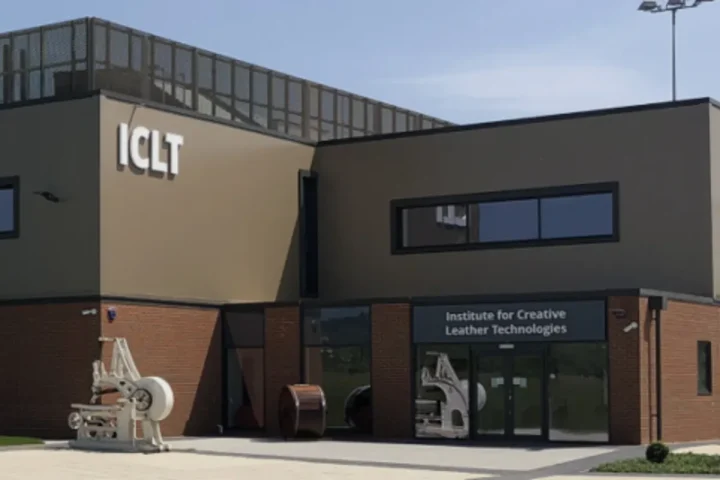
Last week, David Millar quietly announced that July 31 would be the final day of the Institute for Creative Leather Technology (ICLT), marking the end of over 100 years of leather training at Northampton.
This draws to a close a lineage of UK leather education stretching back into the 19th century with Charles Lamb at the Herrold College in London and Professor Procter at Yorkshire College, which later became Leeds University.
We wish David, who has managed the ICLT tannery for the past five years, and his dedicated colleagues the very best. This is clearly a moment for reflection. My own involvement with Northampton began just over 20 years ago when Vice-Chancellor Ann Tate invited me to become a Visiting Professor and join the Leather Industries Advisory Committee (LIAC).
At the same time, she challenged the LIAC Chair, Reg Hankey of Pittards, and I to justify keeping leather as a subject and the need for a teaching tannery. We wrote a case for both and then supported The Leathersellers’ Company, who helped modernise the experimental tannery.
Northampton became the UK’s sole leather teaching facility in the 1970s. Leeds and Leathersellers College closed, and the British Leather Manufacturers Association (later to become BLC) relocated from London to an industrial estate beside the university. Although the UK leather manufacturing industry was shrinking, it still saw itself as globally significant. British and international students enrolled, including from Ethiopia and former colonies keen to add value to local raw material.
But the 1998 introduction of UK tuition fees made it harder to find sponsored students, and as emerging economies matured and developed their own training centres, overseas demand dropped. EU students offered some hope – until Brexit in 2016. The timing and totality of ICLT’s closure was badly executed and should not have been so comprehensive but was not a complete surprise.
Changing world
There’s been talk of replicating Northampton’s model elsewhere, but that’s unlikely. Today, two master’s programmes taught in English exist in Europe, and excellent facilities are in places such as Chengdu, Chennai and Brazil. More recently, Ethiopia’s Textile and Fashion Institute won an IULTCS award, and their Dr Mike Redwood Young Leather Scientist Sustainability/Environmental Award went to Louret Atsenga Andalo from Dedan Kimathi University of Technology, Kenya. Northampton is a big loss, but alternatives now exist and deserve our support.
A new UK leather city
In the UK, a new model of leather education is emerging – more connected to designers, makers, fashion and footwear – alongside the leather industry’s increased development of skills through apprenticeships.
In Leicester, De Montfort University (DMU) has been taking up the challenge. The city has been associated with shoemaking for centuries and had a strong apprenticeship system by the 19th century to meet the tight specifications of manufacturing military footwear. Formal training dates to 1882, when Leicester Technical School was founded to support sectors such as textiles, footwear and pharmacy.
Today, Leicester is actively supporting leather through education, heritage and innovation, as it works to expand jobs in the city, including efforts to retain skills and employment locally. In the Netherlands, Eindhoven’s regeneration involved the city converting former Philips factories into vibrant mixed-use creative spaces for start-ups, aiming to stop graduating students disappearing to Amsterdam for work. Leicester is doing something similar with hubs like Canopy and Makers’ Yard.
Leather conservation
The Canopy building, opening later this year, has the Leather Conservation Centre (LCC) as its first tenant. The LCC has struggled to find new premises after Northampton University moved into the city and Leicester, in contrast to Northampton, has been welcoming.
The LCC plans involve community outreach and expanding collaborations with DMU and Leicester University across Leicester’s museums and heritage institutions. At the heart of this is DMU’s own museum, located in the original technical college. Devised by Gillian Proctor, who has been leading the DMU move into more leather, it has been hosting an award-winning exhibition, Artifacts Live: a legacy in leather, where final-year students use museum items as inspiration for design work. The results have been outstanding, and a second edition is planned for 2026.
In October, the ICOM-CC Leather and Related Materials group will hold its first UK conference in Leicester, hosted by DMU. Joint short courses are already running, and students are gaining more exposure to leather materials and sustainability. The University of Leicester is also involved, contributing its expertise in chemistry, AI and conservation. The Leather Conservation Centre has already hired a local graduate into a new role.
Leicester is not just hosting these initiatives – it is an active partner, providing infrastructure, funding, strategic support and skilled collaborators. The city is helping integrate leather’s past and future into its identity.
My last commercial leather link to Leicester was selling to Equity Shoes. Equity grew from the famed Leicester Co-operative Boot and Shoe Manufacturing Society, founded by workers – an example of how leather shaped the city’s identity. DMU embodies this legacy, connecting its leather, fashion and design programmes to Leicester’s heritage through museum projects and skills development.
Looking ahead, leather can become central to Leicester’s evolving identity as a hub for sustainable, ethical, and innovative manufacturing. The city is focused on reshoring production, sustainabilit and training the next generation in ethical fashion, where leather plays a key role. There is already a successful start-up micro-tannery processing goat and deerskins nearby.
Culture and creativity
Leicester’s cultural and creative sectors are projected for strong growth in employment and public engagement by 2030. DMU is central to this ecosystem, combining leather craft with AI, digital tools and interdisciplinary approaches. As an education and research centre, DMU fosters skills that bridge traditional crafts with modern technologies – supporting heritage, sustainability and innovation through programmes and events like the ICOM conference.
DMU could play a major role as society fights off plastics with better textiles and leather, including biomaterials and hybrids that will be required. General Phoenix is in nearby Peterborough, with Tapestry, Dr. Martens and Jaguar Land Rover as investors and strategic partners.
Leicester’s value to leather – and vice versa – lies in sustaining a proud legacy while transforming it through ethical practices, tech integration, and education. This ensures leather continues to be a vibrant part of Leicester’s creative economy and cultural identity for years to come.
2025 is proving a difficult moment for UK universities and, as we have seen at Northampton, it is easy to make poor decisions with big consequences. Let us hope DMU continues with the steady and positive long-term approach they have shown to date.

Michael Redwood
Leather chemist, writer, and advisor on responsible leather manufacturing and material strategy. This article was originally written for ILM.