 Mike Redwood
May 14, 2025
Luxury after everything
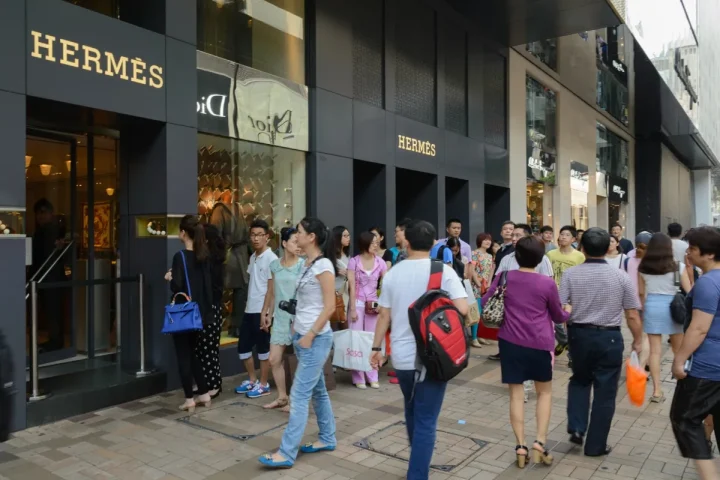
When the combined efforts of animal rights and the fossil fuel lobbies decided to put attention on leather based on the (wrongly calculated) methane output from livestock, a lot of European commentators argued that leather had to focus more on upmarket luxury goods.
Since then, there has clearly been a greater proportion of leather consumed in the luxury segment, given that almost every category of luxury, including sectors such as watches, luxury yachts and automobiles, features leather. And over the last 15 to 20 years, the sectors like leathergoods where leather is foundational have continued to demonstrate strong growth, with brands like LVMH and Hermès.
One element of that growth was that Boomers and Generation X held a lot of the wealth and continued to purchase in a more traditional way. China also started to enter the scene seriously, but whatever their age, the status of owning luxury began with leather handbags. Generation X is a small one, having been born between 1965 and 1980, just after the birth control pill had been put on the market.
As the poet Philip Larkin said in Annus Mirabilis:
Sexual intercourse began
In nineteen sixty-three
(which was rather late for me) –
Between the end of the “Chatterley” ban
And the Beatles’ first LP.
Hence, X is sometimes classed as a “baby bust” generation, which we know has projected the following Generation Y, or Millennials, into senior positions early, and both Y and older Gen Z are making cultural waves as they are true digital natives. This means they have and continue to create businesses not previously imagined and hold many jobs that did not exist just a decade or two ago.
It was always clear that there would be a marked change as Boomers passed on, but the events of the past few years, from the Covid pandemic on, have meant that a lot has happened while business was distracted. As a result, the world is looking at new consumer configurations and changed attitudes regarding what is bought and who from.
Aspirational buyers
We need to recognise that we have luxury buyers amongst Gen Z and Millennials, often aspirational buyers buying fragrances and small leathergoods as entry points. But since they are the digital natives, the tech-savvy crowd, they are often more likely to want to buy ready-to-wear for a party or event and are finding some top brands keen to meet this demand. This means time spent in China on luxury means platforms such as Xiaohongshu and in the West TikTok and Instagram, plus influencers and Key Opinion Leaders (KOLs).
But we should not forget that Chinese youth are struggling with unemployment after the government moves to constrain private enterprise curtailed the growth of high-tech jobs they were training for. Being told they have to take low-skilled jobs and “eat dirt” like previous generations has not gone down too well.
Another major group is the New Affluent/Upper Middle Class, which has been growing in emerging economies such as China, India and Southeast Asia. As first-time luxury buyers, they often go for recognised brands and look for a quality that they feel matches their social mobility, but today’s economic uncertainty, after a period of inflation and now a world of off-on tariffs, does leave them exposed and cautious.
The High-Net-Worth Individuals, or particularly the Ultra-High-Net-Worth Individuals (UHNWI), who are older or very affluent younger buyers from every part of the world, are currently even more important han ever. They continue to seek status, exclusivity and heritage.
Yet nothing can disguise the fact that after years of remarkable growth, there is currently a degree of stalling in the market. To the disadvantage of tanners, the young may prefer a ready-to-wear garment rather than a leather handbag as a first purchase, and the general market continues to move towards experiences.
Spending on experiences
Luxury hotels and travel are both much in evidence. In China, internal holiday travel is on the rise because many people have pets that cannot be left and often now parents and even grandparents get included in the party. Hotels cater for spa treatments but also for a new enthusiasm for hill walking – an opportunity for the watchful tanner.While current geopolitics should not impact luxury goods, which largely come from Europe, the arrival of “China Pride” cannot be ignored. This is bringing many new collaborations, plus moves to bring Chinese designers onto the world stage. Like the automotive industry, where China has jumped from a laggard to leader, the feeling is this directional move will become an irresistible force. China has the traditions in calligraphy, pottery, jade, and perhaps in leather, to demonstrate skill and craft. It has a population getting wealthier and better educated: more capable of assessing and affording value and quality.
The future of luxury will be an evolution rather than a revolution, but it is happening faster than expected.

Michael Redwood
Leather chemist, writer, and advisor on responsible leather manufacturing and material strategy. This article was originally written for ILM.