 Mike Redwood
July 2, 2025
Leather needs all the crafts alive
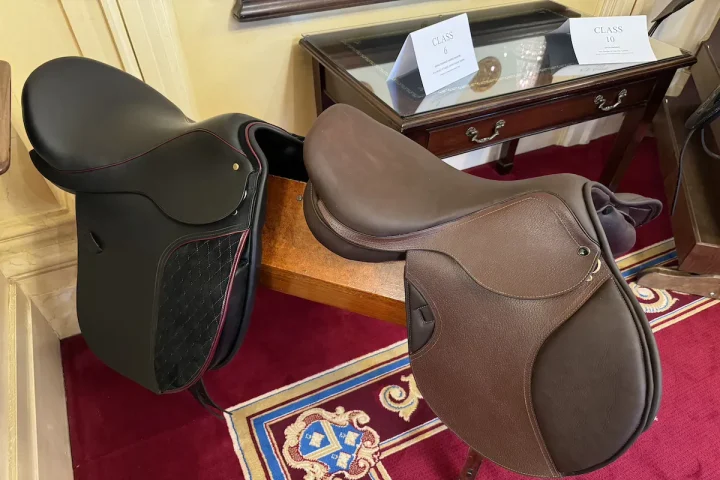
As Europe swelters, we head this week to the hottest part of the UK, on the outskirts of London. Capel Manor College on the outskirts of London was founded in 1968 to offer training in horticulture and animal care. It soon added environmental conservation, floristry, arboriculture and saddlery. Saddlery not only as a natural adjunct but because a previous owner of the ancient estate loved both Clydesdale Shire horses and horticulture.
Last year, I attended their Leatherwork Showcase and Awards Day and was stunned by the quality and beauty of the work of the students. Other leather goods and footwear also won prizes. It turned into an exceptional opportunity for a lively discussion with some very knowledgeable and articulate students.
The idea of the event is to create an opportunity for the next generation to meet industry experts and show examples of fine craftsmanship, which is aspirational for the students as well as celebrating their achievements.
Capel Manor College is one of the UK’s leading specialist colleges for the increasingly critical area of land-based and environmental studies – and it plays a major and growing role in supporting the leather and saddlery trades. It is effectively an educational arm of the ancient “mystery” of saddlery as well as many other ancient “mysteries”. It ensures that the skills, standards and pride of the leather trades survive in the modern world, teaching the traditional methods of leatherworking along with knowledge of sustainable sourcing and materials knowledge.
Importance of tanning
This year, I have found myself consistently highlighting the importance of tanning itself as skilled craft work. Several City of London Livery Companies support the work of Capel Manor, in particular of course The Saddlers. About nine surviving Livery Companies cover areas such as currying, shoemaking, gloving and trading, plus those that supply the industry with raw material such as Skinners. Most exist on subscriptions and members’ generosity, but one or two have sizeable income-generating assets, part of which they use to support the historic trades which created them.
They were all “ancient mysteries”, which is in no sense magic, since “mystery” is from the Latin for a trade or occupation; “ancient” merely represents long-established. In most of Europe, livery companies, or guilds, died out at the start of modern science and industry, but in the UK, they survived because of their strong community links and Royal support.
There was a determination in their historic work to keep the highest standards. As with all such organisations, this came with the problems of protectionism and blocking change, but I think we now recognise that these trade associations from ancient Rome onwards were on balance doing valuable work safeguarding knowledge and skills that were precious. They managed apprenticeships and supported weak and elderly members, which must have helped to retain important knowledge to be passed on.
With the arrival of the industrial revolution and tanning with new materials, making leather has wavered between wanting to be described as an industrial process or a traditional one. It was felt that even the name tannery risked too many associations with odour and wider environmental safety issues – not helped by places like Fez and Marrakesh, who promote the tourism of filth and a foul stench instead of cleaning up their act. There is no mystery in deliberately making a foul stench to sell the theatre of handing out sprigs of mint.
My own thoughts have been tempered by the head of one of the world’s top tanning groups who told me recently that he continues “to believe that we are craftsmen/people and strive to make one side at a time no matter the volume that we can produce”. Leather comes from conditioning hide and skin fibres – a manufacturing term, as we do not create leather from synthesis or assembly – by adjusting the collagen physically and chemically.
Historically, this involved treating the by-product of one industry with barks or galls, which were the byproduct of another (oak trees in the UK), to create a material essential to most aspects of everyday life. Leather was indispensable – used for footwear, belts, bags, military gear and industrial machinery in a pre-plastic, horse-dependent world and will hopefully expand its usefulness once more in a post-plastic world.
Teaching craft skills
The work of colleges like Capel Manor, who work with leather teaching the skills to craft good articles that develop the vital relationship between consumers and materials, demonstrates leather’s amazing versatility with applications from vital basic uses to the highest level of luxury. At the same time, the craft of tanning was itself shaped by the limitations and possibilities of the natural world – such as the availability of oak trees or the management of waste.
Embedded in the community by these dependencies and the needs of a society wishing dairy products and meat, the tannery built an environment of excellence, compassion and integrity. That, in the mind of my colleague, is where tanneries must be proud to stand today: delivering traceable, sustainable and perfectly manufactured leathers to the trades that use them and the consumers who will value them.
This is more than a misty-eyed view of the past promoting artisan leather goods production, but a reminder that many of the “modern” industries of the world, such as the iPhone assembly plants in Asia, are the home of many of the least happy workers and some of the highest suicide rates – all producing articles hard to repair and of limited lifespans.
Given the natural origins of leather, its variability through breed, husbandry, sex and age, the tanning and its utilisation offers only limited room for mechanisation, automation and AI. Human skill, the coordination of hand and eye, the tacit knowledge of daily experience – all make for great leather and the wonderful products made from it.
If you think modern leather making needs to go faster, use yet more chemicals, energy and water, have a read of the first edition of the Encyclopaedia Britannica published in 1771. You will find a detailed process for tanning and dyeing goatskin from a lecture given in London in the 1760s. (“Mr Philippo, a native of Armenia, who received from the Society for the Encouragement of Arts one hundred pounds and the gold medal of the Society, as a reward for discovering this secret”). I am not sure this process has been bettered.

Michael Redwood
Leather chemist, writer, and advisor on responsible leather manufacturing and material strategy. This article was originally written for ILM.