 Mike Redwood
July 31, 2024
Leather is not evil but highly circular
It must have been a decade ago when at the end of a busy day at the ACLE Leather Fair in Shanghai I went to the Smit & zoon stand to interview their CEO about their new Product Passport.
The meeting was lengthy, I had many questions. In the 1950s there was an almost endless stream of new chemicals – retans, fatliquors, finishes and auxiliaries that made tannery technicians increasingly dependent on their chemical suppliers. The chemistry of these materials was complex and hidden behind trade names.
In my early days I remember hearing talks at conferences about the shortage of meaningful scientific papers presented because of this secrecy. Spreadsheets were produced showing comparative products by company with some detail of the underlying chemistry. These were useful when working in some emerging markets where chemical supplies and service was erratic.
Technology ownership
Patents, trade secrets and a general desire to pull power away from the tanneries created a new type of technician who controlled production with a supplier’s process. The ability to scale up and maintain this process in volume production increasing became the key roll of the tannery technician. Ownership of the technology lay with the chemical companies while the tanneries managed them.
However you view it, most tanners will have recognised the existence of this tension and its rollover when building seasonal ranges, product lines or advanced innovations. So, the sudden appearance of a “passport” which gave more than minimum information was much more fundamental than simple marketing. There was both a collaborative and an environmental aspect involved with potentially far-reaching implications. We sat late exploring these thoughts and it was a reminder for me of the adage that “every day is a school day”.
As the leather industry began its move into circular economy thinking, and how it applied to a natural byproduct such as leather, the significance of materials rose. Walter Stahel, the founder and intellectual father of the Circular Economy, argues that it is vital to design products in ways that allow their materials to circulate in open loops through the economic system.
Such a thought makes little sense of our careless use of terms like metal-free, heavy metal or organic but helps us understand why chromium is a difficult chemical to handle through its life cycle when used in leather while vegetable tans and some of the newer tannages are simpler.
A highly circular material
Leather is adapted hide or skin, not a total assembly of man-made items as with synthetic materials which are based around long chain compounds extracted from fossil fuels. These will take many millions of years to be replaced. Tannery processing is defined in production management terms as conditioning, by which is meant that small chemical additions are applied to adapt the base chemistry and structure to make it better fit for purpose.
For those arguing that leather is somehow a big user of chemical materials, and enjoy adding misleading comments about these chemicals, they should reflect on the synthetics they prefer. These damage the climate, deplete planetary resources and diminish biodiversity in ways that are real and serious. When leather is properly made, and the husbandry of the animals from which their hides and skins derive are carefully managed there are no such negatives. We need to remember these facts since all around the world narratives are spun about livestock, meat and leather trying to categorise them as societal evils.
Leather fits the circular aspects of lasting a long time. Articles using it are mostly reparable. Many items pass through the generations and if we can change our thought processes many more should. At end-of-life thought must be given to alternate re-uses, as has been the case through history, since most can be usefully repurposed. And as more hides come available from the meat and dairy sectors more leather can be made.
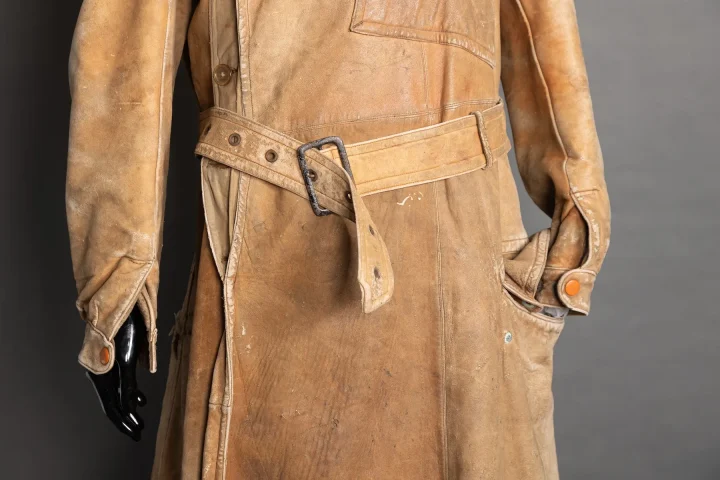
If kept dry and safe leather articles will last indefinitely providing the historical pieces found in museums around the world telling our social, technical and military history. Should they end up in landfill they should be harmless and in five decades or less will have biodegraded back into the world of nature.
In their 2023 book on materials in a circular economy Thomas Rau & Sabine Oberhuber highlight how in preparing a tomb suitable for the afterlife of Pharaoh Djoser around 2,630 BC, the first high level Step Pyramid was prepared. Six layers of stone 62 meters high made it the highest man-made structure built up to that time.
So, for a person whose lifespan was less than 100 years a construction was created that has lasted to this day. A big material impact. In current times we might point to cities and urban sprawl, or major industrial sites, but we perhaps also need to think of the penetration of plastic into our society over the past 50 years which will take between 500 to one million years to biodegrade and damage life in our oceans on the way. Hardly comparable to natural materials such leather or wool.
And Apple who made their mocking video about replacing leather with a recycled plastic mix should consider the Global E-waste Monitor 2020 who found that 53.6 million metric tons of electronic waste was generated in 2019. Only 17.4% was officially documented as properly collected and recycled and anyway 95% of their raw material value is lost in only one use.
Both the plastics and the e-waste are products made for the “temporary need of a temporary being”. They use up resources that are not renewable like leather and they cannot be melted down for reuse as used to be done with swords and ploughs.
The leather model is positive for the planet
Society needs to change to survive and acknowledge the leather model as positive for the planet.

Michael Redwood
Leather chemist, writer, and advisor on responsible leather manufacturing and material strategy. This article was originally written for ILM.