 Mike Redwood
April 1, 2025
Leather in Africa has potential
Africa is our youngest and fastest growing continent. The African leather industry has huge historical significance and big potential for growth in the 21st century. Growth that is essential to provide the jobs that all countries with expanding populations must have.
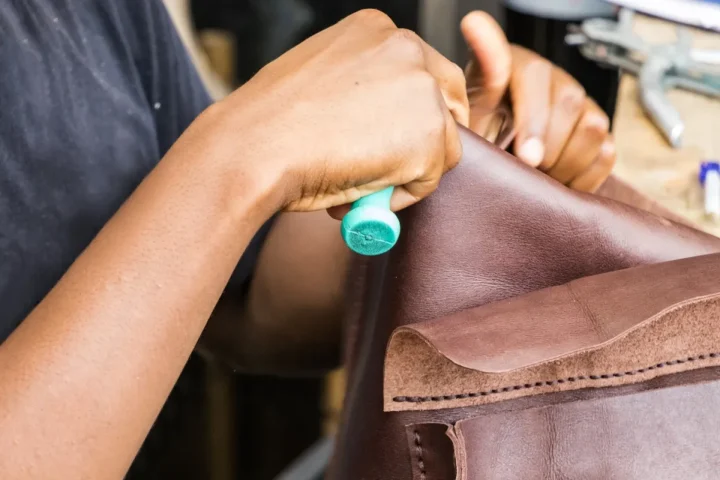
Tanning hides is mostly capital intensive but subsequent stages require increasing amounts of labour, in pretty huge numbers. These are not jobs that will be replaced by machines, clever robots or AI. Employment throughout the leather industry is about mixing the skills of hand and mind. There is craft in every aspect. When that is ignored, leather soon becomes a commodity and the less likely it is that the consumer will care for the article, have it repaired or keep it for its full potential life.
Africa has a rich tradition of leatherworking, with Egypt, Sudan and Ethiopia having histories that span over 3,000 years. Like those other areas, the raw material is not always top quality, with big notable exceptions such as Sokoto Nigerian goatskin and Ethiopian hairsheep, both of which have long been sought after. Yet, despite an incredible history, African leather exports remain minuscule in terms of finished leather and leather articles and, despite many initiatives, this runs against the global trend.
ALLPI strategy deserves our fullest attention
It looks like the COMESA Regional Leather Value Chain Strategy 2025-29 might make the needed breakthrough. The Common Market for Eastern and Southern Africa (COMESA) launched this via the Africa Leather and Leather Products Institute (ALLPI), in a landmark move that highlights the region’s renewed commitment to industrial transformation, intra-regional trade and sustainable value addition. It deserves our fullest attention and support.
The earliest stone tools proven to have been used for skinning and fleshing animal hides were found at Olduvai Gorge in Tanzania. This establishes a deep historical continuity in the handling of skins in Africa over about two million years. Along with the specific leathermaking histories of many African civilisations and societies Africa has clearly had a deep, indigenous tradition of leatherworking, rather than it being something imported or imposed. Rich craft traditions emerged in North and West Africa, including Moroccan, Nigerian and Sudanese leatherworking. Even the modern African leather industry, despite industrialisation, often retains elements of traditional craftsmanship.
Throughout all Africa, leathermaking among pastoralists such as the Maasai, Samburu and Turkana has served as both an economic activity and a cultural expression. Eco-friendly tanning initiatives have empowered women in these communities by providing income diversification and reducing environmental pressures. Leather uses include straps, sandals, aprons and household items from cow leather. And we should not forget the Banyankole (Bahima) pastoralists who reared the famous Ankole cattle which were their prime possession providing milk, ghee, beef and hides. This breed is now endangered as it is being replaced by western breeds less able to withstand the current climate and ignoring the future trend.
The new ALLPI initiative sees the greatest growth as driven by countries with fully integrated operations and quite apart for employment this is vital to get maximum value out of the raw materials. Projects such as common manufacturing facilities for certain areas which offer huge benefits to smaller start-ups and designers, as well creating that vital ingredient of group tacit knowledge. It is well accepted that agglomerations create efficiency, local knowledge spill-over and can be a major source of innovation. Even more for any skilled craftsperson the positive atmosphere of the surroundings will be reflected in the articles they create.
Africa would be wise in this to be sure to follow its own approach and place best use of every part of each hide and skin plus some real thought about the final consumers ahead of rushing into concepts of leathermaking made popular in the last 50 years. Cutting hides into sides and chrome tanning them in high volume has not been a great step forward, nor does the deskilling of tasks by timing operations and paying by unit completed rather than quality adherence. Supposed efficiency like this has come with greater environmental harm and lower leather quality. That is not leather tradition any more than it ever was African tradition. The best Ethiopian hairsheep I have handled is sold without any finish on it, as premium golf glove leather or vegetable tanned for leather goods or bookbinding. In both a top finish with acrylic, casein or even wax spoils the handle and the concept that leather is improved and protected by such a coat is quite false.
Last year’s African Real Leather. Stay Different. competition saw design creativity that is abundant throughout Africa and how cultural history can be the foundation of great contemporary pieces, far away from rustic tourist goods. It also highlighted how many largely unsung colleges were teaching tanning, design and the production techniques of leathermaking. If this can be supported and encouraged it must be used to pull away from the concepts of exporting raw, pickle or wet-blue and getting better leather made locally.
The essence here is to make this a tradition worth more than the gimmicks we see in Fez with squalor being celebrated rather than skill; or make it a stagnant relic with heavily pigmented black chrome nappa and low-grade side leather as major productions.
If articles are priced within the reach of working people, use leather from tanneries where skill, care, and pride in the craft are fostered in a clean, well-run environment, Africa’s leather industry can prosper.

Michael Redwood
Leather chemist, writer, and advisor on responsible leather manufacturing and material strategy. This article was originally written for ILM.