 Mike Redwood
August 14, 2024
Leather and the Olympics
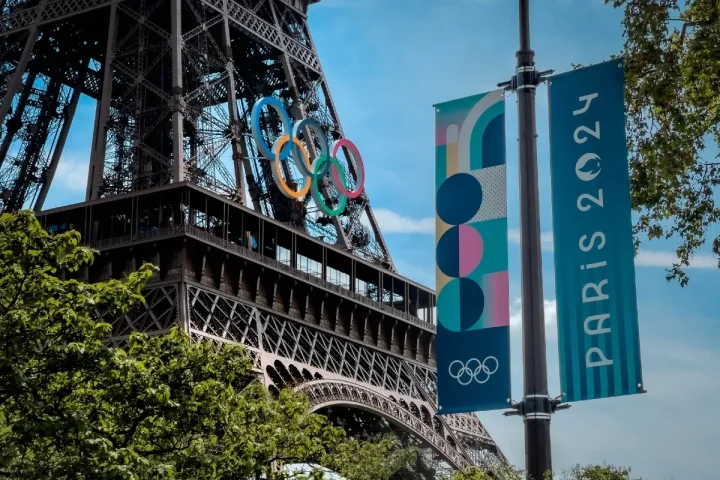
The 2024 summer Olympics are over, with the Paralympics still to come, and have been quite a triumph. A huge contrast to how Tokyo was ruined by Covid, and a reminder that we need joy in our lives to counter the misery of the politics and geopolitics of everyday life.
Paris built on the London and Rio games with gender parity, reduced new builds, creating iconic venues from the best of the city and pulling in the crowds. It brought some delight back to the games and even the pre-games tour with the Olympic Torch, which arrived in a specially made LVMH leather trunk, widened the interest of the public. And they had the sense to reverse the meat-free approach when athletes complained.
This continues to create a more affordable template for the games where ordinary cities should be able to welcome them by adapting existing facilities and using pop up structures to fill gaps. Volleyball beside the Eiffel Tower, fencing and taekwondo in the Grand Palais and BMX and skateboarding in the Place de la Concorde show how clever use of existing spaces and buildings can add drama. Most cities have venues with potential to create inspiring settings for events.
All this still costs money and the two main income sources are broadcast rights, providing about 60%, and sponsorship, with just over 30%. With broadcast fees flatlining, it is corporate sponsorship that is on the increase. Coca-Cola has been with the Olympics as a major sponsor since 1928. It then joined the partnership programme introduced in 1985 which had a dozen big sponsors working throughout the four-year cycle, a group that has since extended to 14. Sponsorship has worked well for the business.
1985 was a significant moment in marketing history as it was when the value of a “brand” was first placed on the balance sheet, when Nestlé bought Rowntrees for a figure massively above the normal expectations because they saw secure long-term cash flow from brands such as Kit-Kat.
How Olympic sponsors leverage their involvement is constantly changing. Curiously, it started to accelerate when the International Olympic Committee (IOC) had to protect sponsors from the famed guerrilla marketing by Nike, who at one games had spectators believing they were the official sponsors.
Now, brands can just as easily find themselves working with individual athletes or national teams as the IOC itself. All can work to great effect if well done. A new category where leather has been widely seen is in the local sponsors specific to the host city. Louis Vuitton wants its name to be synonymous with Paris and a big outlay bought it product placement prominence that turned heads. Jeweller Chaumet made the medals and clothier Berluti dressed the French team, while Louis Vuitton leather trays supported the medals for the medal ceremony and the brand outfitted volunteers. Add in the Samsung phones for podium selfies and the opportunities for future creative product placement look likely to come quick and fast if the IOC needs the money. They do need to take care as some sponsors like Toyota are upset by scandals and concerns over how the cash gets spent.
Apart from the opening ceremony and travel outfits, leather has mostly exited the footwear sector. Perhaps an opportunity for the future as plastic issues increase? Nevertheless, in running footwear we are watching one of the most intense battles among the brands. Given the way the rules now work, this is more of an arms race than a level playing field. When Nike introduced a carbon-fibre plate in the midsole in 2017, it was momentarily game over, but others were researching and Puma, Adidas, Asics and New Balance are all at the show.
Having lost some of its lustre, Nike is now spending record sums trying to recover lost technological ground and reportedly has also spent heavily in Paris to push athletes into the limelight. It needs to as, on top of the other well-known competitors, Nike now has Hoka and On Running on the scene.
In order to better engage a younger audience, the IOC has eased the rules for social media and other marketing areas for nonofficial sponsors. Allowing immediate posting of athletes after events on social media should help companies such as Nike but also athletes who are themselves finding that direct fees for posting on social sites can create significant income.
In this changed scene, one thing still stands out to those of us with long memories of the sports brands. As they have grown in commercial dominance Nike’s old rules of authenticity and justified irreverence appear to have been forgotten. This is not the quick-thinking, fast-moving company that was always in underdog mentality even when in the lead. Nike used to have these old terms built into its culture. It needs them back; assisted by a bit of kangaroo leather.

Michael Redwood
Leather chemist, writer, and advisor on responsible leather manufacturing and material strategy. This article was originally written for ILM.