 Mike Redwood
November 26, 2024
It’s time to stop the plastic problem
Some readers may remember Bakelite. Patented in the early 1900s, it is classed as the first fully synthetic plastic made from phenol from coal tar and formaldehyde from wood alcohol (methanol). It was a tough, chemically resistant plastic.
In the 1930s, we had polyvinyl chloride (PVC) and nylon (polyamide), then a host of new materials setting off output from the 1950s on. Global plastic production grew from 2.1 million tonnes per year in 1950 to over 400 million tonnes today. It means that today we throw away about 430 million tonnes annually and, given that the life of plastic is over 400 years while the service life is 10-20 years at best, most of the plastic ever made is lying around in landfill, the sea or disposed carelessly in uncontrolled sites in our natural environment.
Worse still, 40% of plastic is made for single use – such as plastic straws and drinks cups. Recycling around the world appears to average under 10%. China makes more virgin plastic and more plastic waste than any other country, but now has the world’s largest plastic recycling capacity. Its average recycling rate for the five standard plastics is around 27% — nearly three times the world average whatever statistics are used (it is hard to get true comparable data, but whatever the source it all reads as horrendous).
But the other 40 million tonnes mostly end up in landfill and many of these landfills are located along the coast and waterways which are increasing subject to inundation and rising sea levels. These are already impacting old landfills such as those in the UK’s Thames estuary.
For the UK, the data is clearer. The UK uses five million tonnes of plastic annually with about 50% of this for packaging. Over half (58%) of the pieces of plastic packaging thrown away are – up 12% from 46% in 2022. Between 12-17% is recycled in the UK, followed by waste exports (14%) and landfill (11%).
This incineration creates more CO2 than burning coal as well as some poisonous gases to such a degree that this fast-growing sector is now in financial crisis. Mixed plastic waste, which is commonly incinerated, will contain over 4,000 chemicals with dyes, softeners, coatings, flame-retardants and more incorporated. Exporting the difficult to handle waste sends it to poorer countries usually lacking proper facilities. It ends up in huge landfills in Asia or South America where it often ends up alight; a general environmental disaster.
Plastics have followed everywhere leather has gone
This matters for leather as, almost everywhere, leather is used synthetics or coated synthetic fibres are following. Initially, this was merely a matter of competition but changed when the Higg Index and others heaped livestock emissions on leather and ignored the fossil fuel source of the synthetics, compounding the problem by ignoring the significance of a long working life. And that was before we learned of the immeasurable damage being done by the eight million metric tons of plastic entering the ocean every year, where it broke down into microplastics, smaller than five millimetres, that harm the fish and are now impacting the health of humans and animals.
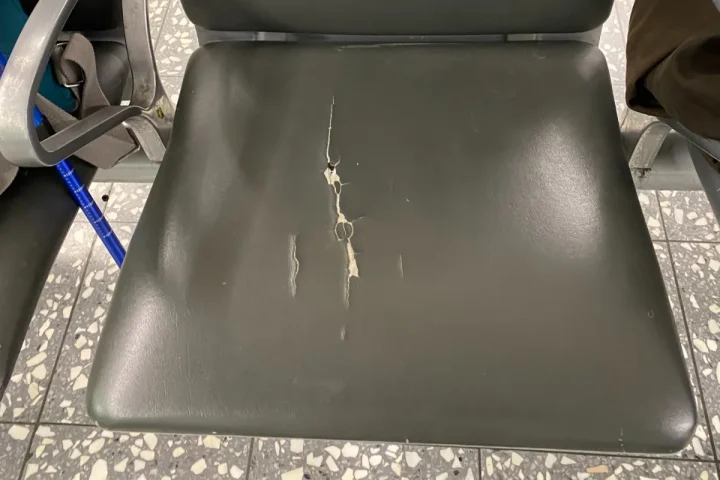
We worry about single use plastics, but much plastic used to replace leather does not last much longer. The coated seat I passed in the airport last week (pictured) has not survived a year and will no doubt soon depart to landfill. How many of us have seen bags, coats, sports gloves and other items promptly delaminate or become unserviceably ugly with stains and dirt in ways impossible with leather?
And of course, the synthetic is always cheaper because so many of the countries heavily subsidise fossil fuels. No wonder so little gets recycled. The failure to recycle is a mix of impossible, too hazardous and not profitable with the latter caused by virgin plastic being so cheap. It is also a result of producers deliberate slowness to act.
With crude oil usage slowing as transportation shifts to renewable electricity and hydrogen, the fossil fuel companies are gearing up to increase petrochemical production. The International Energy Agency (IEA) projects that petrochemicals will account for nearly half of the growth in oil demand by 2050. Plastics production accounts for 12% of global oil consumption and is about 63% of petrochemical output so expansion in petrochemicals is all about more plastics.
This week in Busan, South Korea the fifth session of the Intergovernmental Negotiating Committee is hoping to develop an international legally binding instrument on plastic pollution, including in the marine environment and thus help resolve all this. Scientists and academics will be outnumbered by oil and gas lobbyists diverting action towards the distant prospect of better recycling while posting posters showing the valuable uses of plastic in saving lives in hospitals. Yes, plastics have many good uses but that does not excuse them for undercutting leather or single use cups. And more of the useful ones should be bioplastics rather than from fossil fuel. Equally the whole sector needs simplification with only recyclable or compostable products produced.
The full life cycle of plastic is to be examined, meaning its production, design and disposal. The delegates in Busan represent 175 countries and must hope that the Treaty will include Extended Producer Responsibility (EPR), which holds producers accountable for their products’ entire lifecycle. A few countries such as France, Germany and Australia already have some form of EPR law but it can only be truly effective if it is global, so there is a battle ahead.
The EPR system involves registering with your government and paying for the collection, recycling, and recovery of waste. Companies must report the amount of products or materials put on the market. It is a big project.
It sounds like the right approach but tanners, while welcoming it, should be thinking how it could apply to them, as it is likely to go wider than merely plastic. Not easy for those using leather in multi-component articles.

Michael Redwood
Leather chemist, writer, and advisor on responsible leather manufacturing and material strategy. This article was originally written for ILM.