 Mike Redwood
November 5, 2024
Handbrake turn
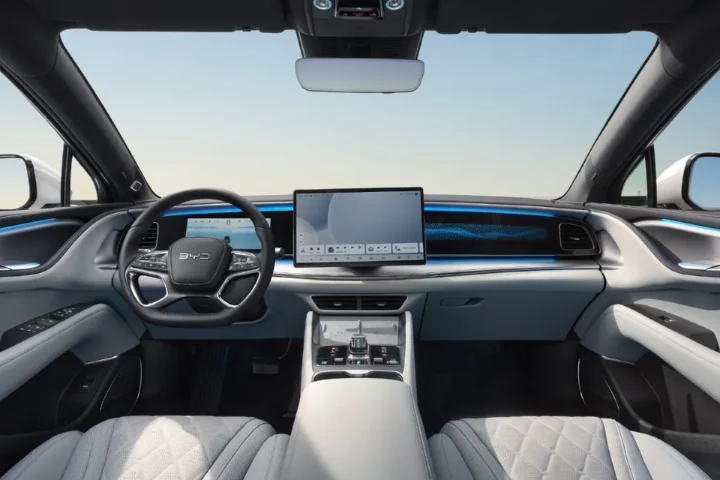
Germany, plus most of the western world, was shocked when Volkswagen announced a plan to close three plants in Germany. It may be a negotiation ploy to get something less through their complex board structure, but clearly radical changes are needed. Simply speaking, the volume carmakers in the west have got their strategy wrong in a very big way, and the leather industry will suffer as a consequence. The car companies’ big rapid loss of share in China’s huge market is not recoverable and their new generation of electric cars are not good enough.
Systemic change is difficult. It requires new infrastructure, consumer acceptance and an ability to overcome all the obstacles of legacy attitudes and infrastructure. Yet the signals were there early in the century. As China’s economy opened, it was clear they wanted to make complete cars and not merely spare parts for others.
The streets of Shanghai
ILM held automotive leather conferences to coincide with the All China Leather Fair in Shanghai in the early 2010s. I remember one when we saw the streets full of small family people carriers, the richer citizens driving Teslas and all the municipal officials driving big black luxury Audis, which cost more than their annual salaries. I made comments that the crackdown on corruption would impact these luxury models, and that changing consumer habits among younger Chinese consumers would cause big changes. But one delegate jumped up to forcefully explain I was wrong, and that Chinese consumers would carry on buying big Mercedes and Audis for a long time yet.
The delegate in question was wrong about China but perhaps was also signifying the continued reluctance of traditional combustion engine producers to make the commitment to shift to electric vehicles. Combustion engines are complex, so a true transition involves planning to dismantle the old as well as building the new. That transition must start with being fair to the workforce. Instead, we have mostly seen lobbying (this week from the French government) for delays, governments reducing subsidies on electric vehicles and being lackadaisical about building the necessary charging infrastructure.
Electric cars are described as mobile phones on wheels; a perfect fit for Chinese skills. With very little old industry to dismantle, available scale (essential for batteries) from the domestic market and subsidies galore it was always going to be an uphill battle for U.S. and European makers to compete. To make higher profits and deal with electric range anxiety, they mostly chose to make large, heavy and very expensive cars. Despite Tesla showing the way, the electronics are generally mediocre when compared with modern Chinese models.
So, the business model of the legacy group has got it wrong, not helped by climate change matters being pulled into the polarised woke capitalism debate and climate sceptical politicians unwilling to fund the necessary changes.
Tariffs and false claims
With both the EU and the U.S. putting tariffs on Chinese made vehicles, for which there would be big demand given their cheap price and high-quality, the Chinese are opening new markets not just in Russia but throughout the global south. This makes developing a new strategy for the German makers harder as they have always depended on exports and adds weight to the ongoing geopolitical realignment we are seeing. So, it is back to digging out the MBA strategic planning notes and a search for true core competencies for the struggle ahead.
For leather it means the rollercoaster will continue, as it did throughout the 20th century. I grew up with my father making upholstery leather for Detroit on British vegetable-tanned dressing hides. Sometime in the 50s this stopped and furniture leather was made instead, often chrome tanned. But 30 years later, after the 70s energy crisis, the automobile trade came back with a vengeance and pulled the entire leather industry out of the doldrums.
The industry commitment to overly expensive electric cars, plus an inability to get economically priced smaller models to market, has put leather under pressure from cheap alternates while the brands hide their cost saving tricks behind false climate and animal welfare claims.
The bigger picture of the transportation revolution has been underway for nearly 20 years, tied to urbanisation, public transport and changing consumer preferences. How younger generations want to work, live and travel started changing long ago. The tanning sector has been adapting to this and will continue to do so, so it is surprising how slow the car industry has been and how small a part they have played in leading the charge. Is it just a throwback to the tobacco and fossil fuel industries, where greed and wealth ignore human health and the future of the planet? The leather industry always tries to look a long way forward and despite its many failings does not define strategy in terms of quarterly dividends.
Losing capacity or jobs in the car industries of Europe or America would be a bad move, but to save them a broad transformation must involve building longer lasting, much lighter and cheaper batteries, recycling all batteries, creating clever software for greater safety and economy and so much more. We complain that the leather industry is trapped in a form of 1970s doom loop, but the automotive industry needs to quickly demonstrate that it is not stuck in something worse.
Unlike the leather industry, which desperately needs research and marketing commitments, the automobile industry does have big cash reserves – VW holds over €30bn – so has the capital to fund a rapid reinvention.

Michael Redwood
Leather chemist, writer, and advisor on responsible leather manufacturing and material strategy. This article was originally written for ILM.