 Mike Redwood
February 11, 2025
Getting social media right as a tanner
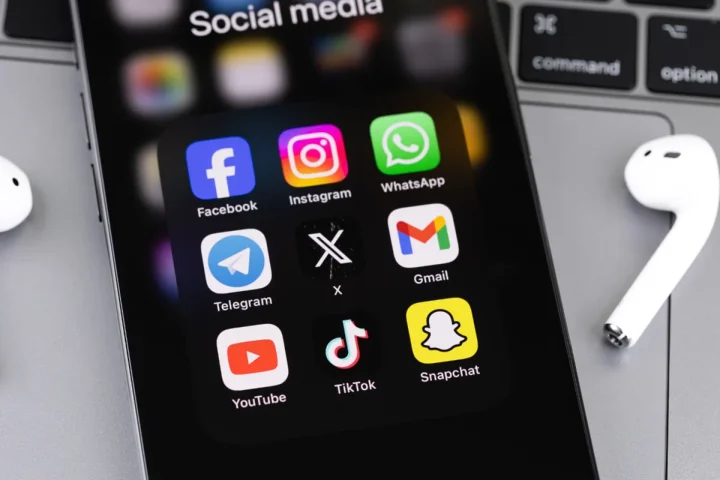
While the leather industry prefers to appoint junior staff to marketing communications positions, primarily handling trade fairs and brochures, it usually finds them more Internet savvy. They often invite them, or are persuaded by them, to establish and run the company’s social media activity.
Anyone can post on social media, and most of us do, so it is easy to overlook that it is a busy and complicated area. Nowadays, even a moderately sized company requires real expertise and full funding to ensure their activity returns some value.
Even first-rate external companies need the tannery to take time to teach them fully about the leather business and how to respond effectively to questions. It is difficult to fully align the objectives of the tanner with the messaging and easy to miss the opportunity to drive the conversation. Replying with a nondescript platitude is too easy, as is using scripted responses. Inexperienced staff are likely to study only basic metrics and chase viral trends instead of sticking to the message.
Given that the leather value chain runs from the farmer to the final consumer, you must be clear who is being targeted in the first place. If the industry is viewed as a network rather than a chain, fashion and design colleges, chemical and machinery companies, testing houses and consultants get drawn into the potential audiences. Somehow, designers have to be picked out in this – what role do retailers play, what control do the brands hold?
Choosing the right campaign
Then the tanner must decide what type of campaign they want. Mostly, selling leather is about business to business, but in the 1990s a number, including one where I ran the marketing, moved successfully to an ingredient brand approach. We emulated the way Nutrasweet worked with Coke. In the leather industry, forcing exclusivity through patents such as Nutrasweet does not work, so we used other tools to build barriers to exit for our best customers and barriers to entry for our competitors, who were many. Higher profits, funding for consumer advertising and hangtags all flowed from this.
Thirty years on, the landscape has changed and the brands are more powerful, and the big tanners in both the footwear and automotive sectors work to tighter margins making bespoke leathers for their customers. Volume and high levels of efficiency give them good returns but the wider grouping of thousands of smaller tanners around the world do not get to observe the activity.
So, each tannery must decide what objective to set for social media. Are they aiming to primarily support the wider story of the value of leather and fight those who want animal agriculture banned or are they merely trying to attract visitors to their stand at the next trade fair? Is this a business to business (B2B) campaign or as required by ingredient branding business to consumer (B2C), so a persuaded consumer will recognise the branded leather and demand it in the store?
Or is there another objective altogether like aiming to be a thought leader, or trend setter in some way? Complex stuff; but whatever the decision the message must be clear and aligned with the audience.
Blurring the lines
When social media started each one Facebook, X (formerly Twitter), Pinterest, Instagram and even YouTube had distinct audiences and fitting the message to an audience was much simpler than today. With overlapping ownership, powerful tracking tools, the never-ending stream to hold viewers’ attention and drive for profit, social media companies are destroying this clarity.
Overall, it is clear that almost everyone has abandoned X, so it is only used to follow real time news and politicians. LinkedIn is by far the most important for business professionals and all B2B, but in my view, it is fast becoming overloaded and losing attention. For younger consumers it must be TikTok and Instagram while Facebook has slipped back into general favour when building up communities and has quite an extensive reach in age and consumer types.
Each requires different types of messaging. Images and videos for the 18-35 Gen Z and Millennial groups are the areas of Instagram and TikTok with the latter enjoying humour and the former more the domain of the influencers; an oversubscribed category as school-leavers to middle aged professionals battle for this space. One viral post no longer makes a career. LinkedIn should be about articles and professional updates but is becoming less focused and more social, while Facebook now handles reasonable length articles.
The leather industry needs more engagement in the younger areas to counter the dominant view (now being expressed by both ChatGPT and DeepSeek) that leather is not a sustainable product.
Leather Naturally
The messaging that every tannery should be using as the basic material to counter this is to be found on the front page of the Leather Naturally website. There are fact sheets and a direct link to the popular Guide to Leather Making. This material is carefully curated to be accurate, avoid all hyperbole and greenwash while explaining and supporting the case for leather from the ground up. Leather Naturally is severely limited by funding constraints but its use of social media has been exemplary in promoting the story and pushing collaboration with serious journalists, designers and makers. Trade associations have been using it, plus some good material of their own in lobbying and political representation.
This has stopped the industry just saying “leather is obviously good” and given it an effective and pertinent narrative.
If national trade associations and major tanners etc were to take the Leather Guide and print it – cobranding with Leather Naturally – it would be a perfect handout for their customers, for educational institutes, trade shows (furniture, leather goods, fashion, footwear etc as well as leather). It could also lead to a global generic tag, again with full cobranding for follow up details.
Then perhaps we could move to greater clarity in social media, and push leather back to the forefront with designers, brands and consumers.

Michael Redwood
Leather chemist, writer, and advisor on responsible leather manufacturing and material strategy. This article was originally written for ILM.