 Mike Redwood
August 26, 2025
From the Pacific Century to Africa rising
By the late 20th century, the world was seeing a shift towards the east and the 21st was predicted to be the “Pacific Century.” East Asia’s rapid growth—Japan, the Asian Tigers, and then China—seemed destined to dominate global economics and culture. This started to shape global trade, manufacturing, and consumer markets, including leather. My own travels from 1985 to 2010 almost perfectly matched this. I gained a huge amount from endless trips to Asia with Japan, China, Thailand and Indonesia as major destinations along with many others.
But today, a quarter of the way through this new century, the story is complex: The Pacific has not become the sole global centre. Instead, supply chains are multipolar, and attention is shifting towards Africa as the next demographic and industrial centre. Japan has stalled. After a strong start, aided by WTO entry (2001), demographics, rising costs and geopolitics have curbed momentum in China where the government is now chasing high technology sectors.
A China-plus-one policy slid into a China-only scenario at the turn of the century for many major brands, but then with rising Chinese costs brands reluctantly began to disperse to other Asian locations. Overall, though, the Asian tanneries drove demand for hides from the Americas, Europe, and Australia, while Chinese consumers became the main growth driver for luxury demand in the 2000s–2010s. But this growth has now stalled.
One constant in all this has been the retention by Asian producers of the U.S. and Europe as the primary target markets. After the 2007 financial crisis mostly hit the U.S. and Europe (who had created it), I anticipated a greater determination to find alternate markets and a failure to do so is playing into the current scenario as the capricious and grasping U.S. tariff policy is reminding us.
Africa is relentlessly emerging as the next frontier
As birth rates decline elsewhere and global population growth slows, Africa becomes not just a focus for investment and trade, but a central actor in economic and geopolitical decisions. Africa’s population will reach almost 2.5 billion by 2050, and close to 40% of the world’s population by the end of the century. This “demographic dividend”—a rapidly expanding and youthful labour force—could reshape both its own economies and international power structures.
The “Africa Rising” narrative describes two decades of sustained economic growth, improved governance and increasing foreign investment, especially in technology, infrastructure and commodities. By 2050, more than half of Africans will live in cities, powering new consumer markets and fostering innovation (e.g., Nigeria’s film industry, mobile payment platforms).
So instead of the century looking to be a Pacific one, Africa is now emerging as the next frontier—as a source of hides and skins, a potential processing base and a rising consumer market. The challenges are formidable, but Africa has a lot going for it.
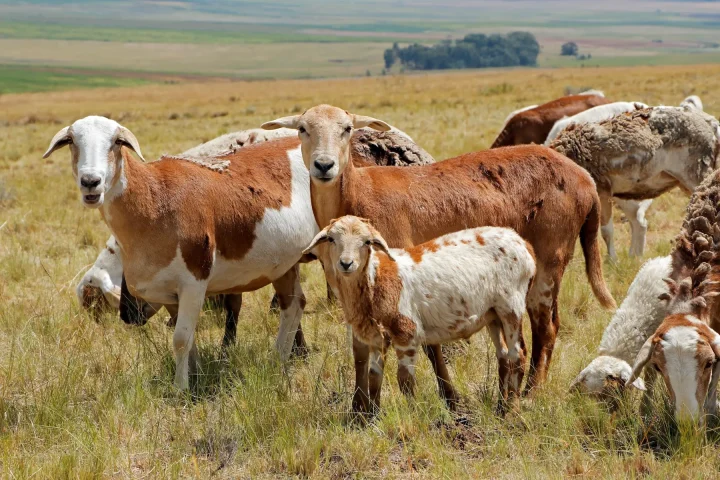
With a young, growing workforce and with rising incomes, Africa is becoming a domestic market for leather goods, not only an exporter. Herd sizes are significant and likely to expand with major hide and skin sources in Ethiopia, Nigeria, Sudan and South Africa. Tanneries and footwear factories are developing, with Ethiopia as an early example.
Having watched much of sub-Saharan Africa stagnate or decline between 1975 and 2000 while China transformed, the remarkable change in this century signals an ability to handle challenges, even the USAID withdrawal, and maintain momentum.
Infrastructure, logistics, trade barriers, power and political stability remain challenges and climate change has already shown its hand in damaging crops and impacting livestock with heat stress. Unless dealt with, climate change could cut the continent’s GDP by 3% by 2050. In agriculture, African countries must improve efficiency, stop increasing output only by taking over more land and look after its grasslands better. Agriculture—nearly a quarter of Africa’s GDP—is especially vulnerable since most farming is rain-fed and increasingly impacted by droughts, floods and heat stress. This barrage of negatives leads to food insecurity, reduced export revenues and damage to vital infrastructure. What is clear is that with each major event — drought, flood or storm — it gets more difficult for farmers to recover.
Nearly half of Africa’s land is grassland, supplying grazing for more than 70% of the rural population. Degradation from overgrazing, drought and extreme weather is eroding soils, intensifying bush encroachment and reducing ecosystem productivity. If forage quality declines and water sources dry up, pastoralists and herders will be forced to migrate further and potentially provoke local conflicts over resources. Adaption will require multi-species pastures (combining grasses, legumes, herbs) and rotational grazing to build resilience and maintain livestock and leather supply chains.
The amazing albedo effect
African grasslands are vital for biodiversity and play a valuable climate mitigation role due to their high albedo (reflectivity), making them effective for cooling local climates—a function that cannot always be replicated by tree planting in these ecosystems.
Building a leather industry is hard, and the raw material, with a few exceptions, is not the best, so will require a creative approach in tanning and product design. With proper investment, only some of which should be inward, African tanneries can adopt cleaner and more future-forward technologies from the start and leapfrog the rest of the world. A recent EMBER report on the dramatic uptake in solar panels across the African continent may be the marker of a major turning point.
The continent retains enormous potential, with many countries forecasted as major growth economies in coming years. Climate adaptation, investment in resilient infrastructure and unlocking the underlying history of creativity and craft could help unlock opportunities and mitigate the worst impacts.
Africa will not be the only hub for the future of leather which is destined to return to a more historic multipolar situation; and such an industry will be more open to new ideas, new ways of working. A better future for leather.

Michael Redwood
Leather chemist, writer, and advisor on responsible leather manufacturing and material strategy. This article was originally written for ILM.