 Mike Redwood
October 1, 2025
Closer to nature
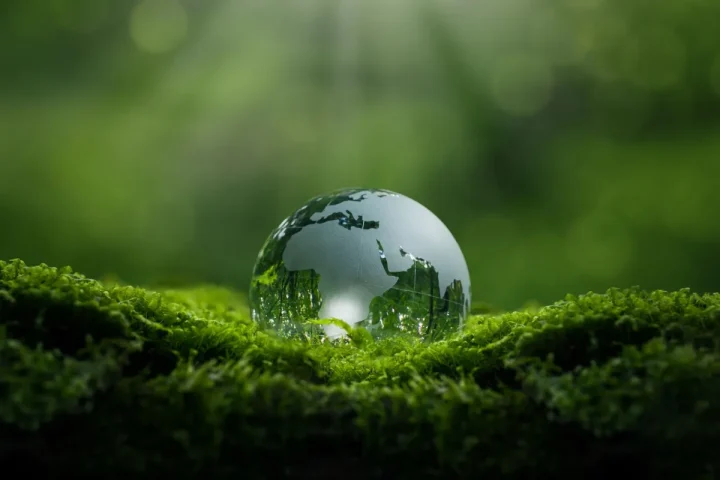
Making leather is sometimes called a manufacturing process, and occasionally we call tanneries “factories” to escape association with environmental sins of the past. This should end – most of those “sins” are only so defined by looking backwards with modern knowledge of science and medicine. Responsible tanneries today, the overwhelming majority, are celebrating environmental responsibility while adding value and permanence to an outstandingly clever natural material.
Consequently, we are dependent on our farmers for our raw material, and to fully understand it we cannot allow ourselves to get distanced from them. In these autumn months in the northern hemisphere, we joined other societies to celebrate the harvest completion. In our tiny 13th century church in the Bishop’s Palace in the Somerset city of Wells harvest has been celebrated for over 600 years: this is in common with most societies and religions that have marked the harvest season with special observances or festivals throughout history. Such events are so nearly universal because agricultural cycles are fundamental to human survival, and successful harvests critical for maintaining food supplies during the winter months or dry seasons.
Usually crops and fruits are displayed and occasionally farmers bring a cow to graze outside to emphasise the link between humanity and the land. This time the songs and texts spoke of tractors, fertiliser, combine harvesters as inventive skills which free up labour to give us fuller lives. They also spoke of people starving in all parts of the world.
Regenerative farming
In emerging markets this is often a lack of infrastructure to store and get produce to market leaving good food to waste on the land. In developed economies we have allowed food to become so cheap in ways that often trap farmers into low margins pressured by dominant retail systems whose sales polices create overbuying and enormous waste. This is further aggravated by many consumers having forgotten how to cook. Correct these two and we can feed the world.
The leather industry is now an advocate of regenerative farming in all its forms, as it is in using livestock to retain and restore ancient grasslands and the biodiversity they support. To support humanity, biodiversity and the long-term future we would prefer human inventiveness to move away from monocultures, fertilisers and efficiency only measured in monetary terms.
Leather has always been a product rooted in farming, in herds tended through the seasons, and in the intimate connection between people, animals, and nature. Many of our other raw materials emanate from nature. Think of oak bark, best cut in the spring from trees coppiced every twenty years. Both demonstrate how nature uses chemistry and physics to produce the outcomes it wants. Tannins in trees and plants are a defence mechanism against herbivores, insects and bacteria. Skin also provides robust protection, regulates moisture and temperature, supports physical structure, and resists all manner of environmental stress and decay. This remarkable material can also remain effective via constant cellular turnover and healing processes that restore integrity after wounds.
While tanning is best understood as an ancient craft whose origins stretch back thousands of years, it is one of humanity’s oldest chemical industries, born directly from necessity and close observation of the natural world, it is also a high-tech industry working with high-tech materials for the benefit of humankind. Whether the tannery works in a traditional way or a modern one complex chemistry is involved and processes managed to create a reliable product fit for purpose in every case.
Leather carries the imprint of life
A risk lies in seeing tanning only through the high-tech lens and forgetting its grounding in nature. Leather’s enduring value lies not simply in its durability or versatility, but in the fact that it carries the imprint of life. Unlike synthetics, each hide records the growth of an animal. The grain, the subtle variation of fibre, even the tiny imperfections—these are not faults to be hidden but reminders of origin. When a tanner handles a side, the responsibility is to honour that inheritance, to “keep the nature” in the leather.
Leather that retains its natural character has qualities no plastic or coated imitation can match. It breathes, flexes, moulds to the foot or hand, and ages with dignity. The patina that develops on a well-used leather bag or chair, or the shine that comes from years of polishing a pair of shoes, speaks of continuity between the living animal and the life of the owner.
By contrast, when leathers are heavily coated—with many layers of pigment and polymer—the material may become uniform, easy to wipe clean, and resistant to marks, but it also becomes anonymous. For certain upholstery needs, for example in transportation, where easy maintenance, durability and fire resistance are all key elements this can be difficult but for most other uses and even in most upholstery situations it is possible to keep the leather looking and feeling natural.
Tanners must maintain leather’s cultural and aesthetic worth
For the more covered leathers, when really needed, it is important to find ways to pass the message to the consumer that unlike plastic it has value far beyond the surface appearance. Tanners must ensure that they maintain the essence of what gives leather its cultural and aesthetic worth. The future lies not in choosing between craft and high-tech, but in binding them together. The craft carries heritage, touch, meaning and a sense of place; the technology provides efficiency, consistency, and environmental responsibility. Leather must never lose sight of its origin in nature. The tanner’s highest achievement is not to impose perfection but to reveal the beauty already within the hide.
Leather is sustainable when produced with care and responsibility because it makes full use of a byproduct of the food chain and turns it into something of lasting value. It is meaningful when customers understand that their shoes, bags, or chairs are not merely manufactured goods but part of a larger natural cycle.
Standing in Wells that autumn morning, celebrating another harvest, was a reminder that gratitude is inseparable from humility. The farmer depends on the sun and rain; the tanner depends on the animal and the land from which it comes. In leather, as in the harvest, our role is not to dominate but to preserve, to cherish, and to pass on. To keep the nature, and in doing so, to keep the value.

Michael Redwood
Leather chemist, writer, and advisor on responsible leather manufacturing and material strategy. This article was originally written for ILM.