 Mike Redwood
July 8, 2025
Celebrating sporting leathers
The sudden announcements from major sports companies that they would no longer use kangaroo leather in their sports footwear seemed like a rerun of the campaign 25 years ago against David Beckham and his Adidas boots.
As then, the position taken by the companies today lacks logic and mirrors some politicians and even, sadly, other sustainability executives who find it easier to follow the weight of lobbied opinions in place of proper research – and think it makes for a good marketing story.
The move away from leather in sports footwear by major sports brands such as Nike, Adidas, Puma, Asics etc., led by the halt with kangaroo leather, favours synthetic alternatives. It is a shift driven mostly by cost and associated easier mechanisation. They argue animal welfare and environmental concerns, but with little scientific foundation: it is no more than a current, but powerful, version of Baudrillard’s hyper-reality marketing.
It is in fact a moment when we should be celebrating the significant place leather has always had – and still does play – in sports. It provided the balls, originally often pigs’ bladders, and footwear that got many of them going, and remain specified in cricket, baseball, volleyball and American football. In motorcycling, leather is still the best for protective outerwear and gloves, as it is in gloves for golf, baseball, boxing and cycling.
Sports are an important market
The background to all this is that every summer Europe seems to be overwhelmed by major sports events, and 2025 is no different, with Wimbledon, UEFA Women’s Football, Test Match Cricket, Le Tour de France, F1 moving through European venues and a golf tour structure that is too complex to describe rolling relentlessly through Switzerland, Ireland, Denmark, Germany, Spain, the UK and more. Sports are important – and not just as a spectator item. They are a market not to be overlooked.
Clearly leather utilisation has diminished but still holds a strong position in certain areas where its feel, durability, flexibility and performance add value. In almost every area except equestrian sports, the middle to lower categories are controlled by synthetics and it is hard to find evidence of the leather industry fighting back with improved products and stronger marketing.
The main materials used to replace leather in sports equipment and footwear are polyurethane, PVC or polyamides such as nylon. While “biomaterials” are always mentioned, their poor physical properties have meant there has been no serious adoption.
The major ongoing rethink about supply chains, while creating disruption, may also offer possibilities for leather to retrieve some market share. Many of the countries likely to replace China in making sports footwear and equipment – such as those on the Indian subcontinent – still have a strong interest and capability to use leather. At the same time, consumers and brands should soon start to realise the damage created by using materials made from fossil fuels with their end-of-life issues.
Amid the important discussions on traceability, life cycle analyses, banned chemicals and the like, we should therefore spend much more time looking at the technical advances needed to ensure existing sports leathers can enlarge their share. Raw material is being thrown away that needs to get back into one market where good design can accommodate less than perfect grains.
We know how to make leather strong, water-resistant, perspiration-resistant and more. And tanners should be capable of writing new narratives around the cult leathers that slide so magnificently out of the history of sports, while at the same time creating completely new leathers that meet all international standards and can be scaled. There is a lot of opportunity for plastic replacement and completely new concepts for imaginative tanneries.
Cricket ball leather
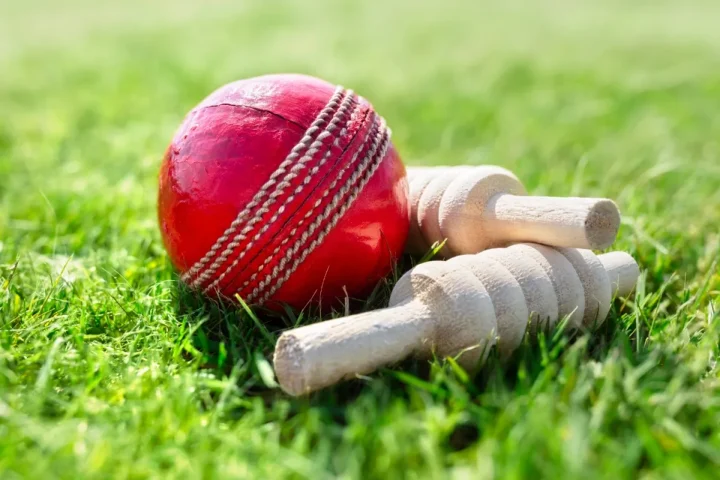
Alum-tanned cricket balls and baseballs offer a typical example. This is not about nostalgia or romanticism. Alum tanning makes a better ball in many sports and should be consolidating and widening its role. It is because the wax-finished alum-tanned leather can be polished in play to create exciting bowling and batting whether the ball is bowled fast with swing or slow with spin. This is why the five-day test matches between England and India have been so compelling.
The wax protection means that the finish can be polished back in ways that allow the ball to move in the air and off the bounce. The whole story of alum-tanned sports ball leather is rarely told. Victoria Beckham used the baseball stitch in the special edition Range Rover she designed. It told a classic American story with a nod to her husband’s interest in sport. In many ways, the cricket ball seam is just as iconic as the waxed leather but like the alum-tanned leather it is a story not told.
In fact, some tanners have been pushing chromium tanning as it is supposedly cheaper and easier, taking the industry in entirely the wrong direction. Where is the value in hiding the special opportunities of a natural material by creating a commodity?
And we must not stop fighting to keep the sports sector using kangaroo skins. The ethics of making use of the skins in conjunction with the environmental regulations are clear, as is the value of the leather when perfectly tanned to capitalise on the exceptional strength and light weight that make them perfect for football and track sprint footwear.
This is the moment to reduce reliance on fossil fuels from a bygone era and embrace the more durable and renewable natural.

Michael Redwood
Leather chemist, writer, and advisor on responsible leather manufacturing and material strategy. This article was originally written for ILM.