 Mike Redwood
July 8, 2024
Be careful with language and lobbying
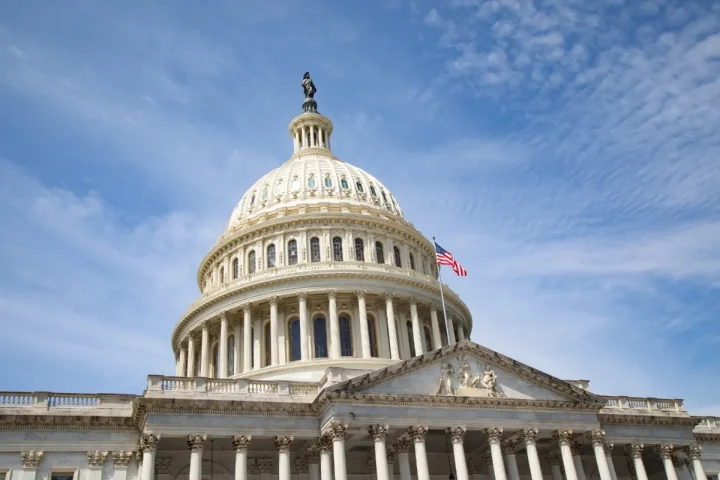
Events in the U.S. have had the world’s attention this last couple of weeks and, given the importance of the country in terms of hide supply, global free trade, the dollar and as a rich consumer market, it is impossible to look away.
Every tanner will be working extra hard with their marketing teams to calculate the implications and preparing scenario plans but there are two other aspects worthy of consideration. These are language and lobbying.
Lobbying has a long history and will always be important, but that does not mean that the roles of business and management should become intertwined. There must be a separation. Government has a role in creating a favourable environment for business to function properly but must also be watchful that this does lead to harm to society. This is a difficult balance. Around the world powerful leaders are choosing to control industry while greedy politicians are increasingly choosing to monetise their roles while still in office, never mind afterwards.
In the leather trade, we cannot escape lobbying. Lobbies related to agriculture, meat, animal rights, fashion, food, climate change and fossil fuels all impact leather in overlapping and often unexpected ways. A decade ago, when efforts were being made to get better protection at the EU level for the term “leather”, I heard from an expert I was helping that leather had a reputation within the EU Commission for being very noisy and pushy. Apparently, this was causing concern, but to me it felt like the reverse. For a small industry without big profits to disperse, being heard at all is an achievement. To be noted as having a recognisable voice is outstanding.
A good track record
Without question, over the years, European tanners have looked to play their part in all EU initiatives, having used available funding to look at every aspect of the business. Projects going back 25 years, such as RESTORM, had a lasting impact on European leather making in both practical and cultural terms. This is a commendable record.
It is also how lobbying should be. But when a rich businessman can buy powerful communication tools such as X and then promptly endorse a candidate for President of the United States, clearly expecting to have influence on a future government policy, it does not make for sound government. Being rich through luck or skill does not give anyone the right to unelected power; it gives them a greater duty to behave responsibly.
Although we are in a year of elections, every country has a different system and there is hardly anywhere where the relationship with business is straightforward, be it Russia, India, the UK, Brazil, Germany or the U.S.. Governments must tread carefully. The leather industry can, and will, survive them all. A number worked in Ethiopia through the Derg and the various governments since. In Salvador, we watched the long Civil War begin, and one way or other the tannery survived. You learn resilience but it brings prosperity to no one.
So, the leather industry must also tread carefully. If we are to present ourselves as producing a sustainable material, then our societal behaviour must be exemplary. This goes beyond our employees and local community, and into our moral responsibilities in the wider community.
And language matters too. Against normal protocol during the recent UK General Election campaign our new Prime Minister said that our old one was lying. As in all political campaigns, the truth will sometimes get mislaid amid the noise but a statement like this was unusual. However, when both men walked back to the House of Commons after the King’s Speech in the House of Lords, their friendly conversation continued on the floor of the Commons with the new Chancellor of the Exchequer joining them. This made it clear that the two main party leaders had respect for each other. We will have robust but honourable opposition.
Calling our competitors enemies, crooks or being ultra-aggressive is never sound behaviour. Competition is a fact of life and must be dealt with objectively. If they are breaking the law or trying to mislead customers, we must call them out. If necessary, we must ask (and fund) our trade associations to see that such behaviour is prosecuted by legal means, be it a breach of the law, advertising standards or trade descriptions regulations. And we should expect our governments to give the courts and all regulatory bodies the funds and independence to do their jobs properly. They are not to be used as tools of power.
In leather we understand asymmetry. With big hide businesses at one end and brands at the other, we are squeezed and this shows in general margins. Attempts to change this, as attempted by the formation of the United States Leather Company and then in a lesser way by Barrow Hepburn, have so far failed.
Lobbying by big oil and vegan billionaires is even tougher to deal with, but evidence of the last decade is cutting through. When the industry behaves well, invests in good science, makes leather responsibly and lobbies strongly but in a fair and proper manner, we start to get noticed.

Michael Redwood
Leather chemist, writer, and advisor on responsible leather manufacturing and material strategy. This article was originally written for ILM.