 Mike Redwood
March 11, 2025
APLF becomes a pivotal moment
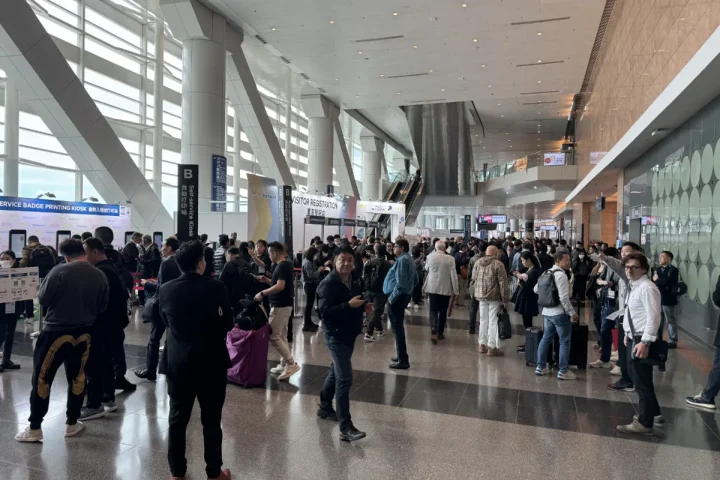
I miss going to APLF. I was at the first back in 1984 and it coincided with my first trip into China when we went by train to visit a tannery in Guangzhou. Apart from the year my father died, I attended them all up to the pandemic.
Trade fairs in the leather industry each have a slightly different purpose over and above exhibiting, making connections and hopefully sales. APLF began in Hong Kong when Asia was quite an alien destination to most traditional tanners. While the footwear and other leather using industries were already well established in Korea and Taiwan, and India and the subcontinent, the leather industry was moving strongly forward. What we saw in our trip to China was a vision of a distant past.
Yet things were changing. U.S. President Richard Nixon visited China in 1972, Chairman Mao died in 1976 and the new paramount leader Deng Xiaoping introduced the new policy of “Gaige Kaifang” – “reform and opening up” – in December 1978.
That was bringing in foreign investment and opportunities for selling raw hides, semi-processed and finished leather as well as chemicals and machinery. Enlightened leadership at APLF understood this was a vital moment for the industry to gather and interpret the role of leather in the future of this huge economy with an amazing growth potential. Despite its poverty and alien political and economic policies (80% of industry was state-owned in 1978), opportunities for mutual benefit abounded.
APLF became a place where senior executives would hold many one-on-one meetings as they worked out long term strategies. In the early days, the smaller attendance limited it to a few senior staff and the 10am start made having such meetings simple. For Western executives, Hong Kong was the city where all trips to China would end up for the final day and flight home.
Jump forward 40 years and we have latest LHCA newsletter discussing the America First Trade Policy – “a flurry… involving 220 Executive Orders with which President Trump has been changing the landscape of trade relations intended to protect U.S. national security and domestic industries from unfair trade practices and global excess capacity”. Difficult to calibrate thinking back to the big U.S. parties at every APLF 30 years ago.
The article concludes by noting that China represented 60% of U.S. exports of hides and wet-blue in 2024 and Mexico is the U.S. second largest export destination, mostly for automotive leather. With so many motives for the use of the tariffs they recognise it will be impossible to avoid the fallout.
The leather industry holds no power in this, but it comes at a moment of great upheaval:
- The complex world of environmental science with difficult legislation such as the EUDR forestry laws, postponed but not yet safe for leather
- The over-reaction against areas such as ESG and DEI create problems when some of their elements have become important to the leather industry’s story of advanced sustainability
- And implications of new consumer behaviour as we lose the Boomers and watch new generations who have grown up in totally different world and technical contexts taking control of purchasing power.
APLF continues to adapt by addressing these contemporary issues affecting the industry. Having created an event which has helped build international relationships and friendships will this week encourage the industry to contemplate the big picture as well as the scenarios involved in the nitty gritty.
As well as the Leather Supply Chain Symposium, the ICT, Leather Naturally and Leather Working Group will all be holding major events as all major leaders will be in Hong Kong – a testament to the fair’s commitment to serving the whole industry. These should provide valuable insights and foster resilience among industry stakeholders amidst a turbulent geopolitical landscape.
The leather industry has good international relationships but as the industry has expanded East and South, its organisations have been slower to widen membership. For global strength for leather, this must happen. Early on, China embraced the International Tanners Council, the IULTCS and I think even the International Council of Hides, Skins and Leather Traders Associations (ICHSLTA), and all sides have greatly benefited. If other nations are not getting involved, now is the time to find routes of entry to form an even more united front as we face a future of more negative arguments about leather and ever better-quality alternates.
In summary, APLF remains a pivotal event for the leather industry, offering a vital platform for business engagement and knowledge exchange. While geopolitical factors can influence the dynamics of such trade shows. But APLF’s proactive approach to current industry challenges will only ensure leather’s continued relevance and importance in society if everyone gets working together.

Michael Redwood
Leather chemist, writer, and advisor on responsible leather manufacturing and material strategy. This article was originally written for ILM.