 Mike Redwood
November 4, 2025
AI, time horizons and two economies
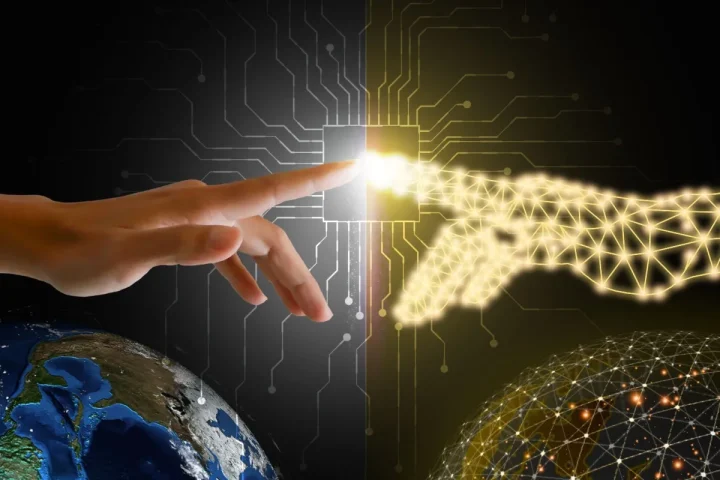
As society deploys all its human and physical energy, along with eye-watering financial commitments, into the digital world of artificial intelligence (AI), the objective appears to be the short-term one of capturing the high ground to win the spoils. So-called database “learning” and “scraping” are more involved in accessing all manner of data free of charge and before any creator can prevent what appears as a vast, unregulated extraction of intellectual property. Key governments, companies and uber-rich investors appear able to delay any form of regulation.
The spoils of this gamble promise unprecedented concentrations of wealth to those standing on the high ground when the music stops – and a huge boost in GDP for the winning countries, at least for a while. The likely losers are displaced white-collar and creative workers who will end up unemployed, along with the causes of social and environmental sustainability. Instead of cutting emissions through credible energy transition policies, they argue that geoengineering – deliberate large-scale interventions in Earth’s climate – will somehow offset the outcomes of climate change. This approach, like AI itself, treats complexity as something to be controlled for profit, rather than stewarded.
For those of us in leather, this is not some dreamy debate. Tanners have always depended on a healthy planet and the biodiversity that underpins it. Leather is a material rooted in regeneration, using a byproduct of food production and turning it into a durable, repairable good. The issue here is one of time, since leather depends on the “long term” stewardship of technological, social and ecological systems that extend far beyond quarterly cycles or political terms in office.
Used wisely, AI could help manage resources, reduce waste, and even support regenerative design — but only if deployed within the moral compass of the nature and craft economies. But currently, the AI race is essentially only about market capture while it neglects broader, societal wellbeing and planetary stability. For the fundamental challenges we face, modern society has set its horizons far too close. In an era when technological change threatens to displace large numbers of creative and white-collar jobs, AI and other short-term policies risk creating a destabilising mass of lonely young men without adequate education, employment or community. That latent pool of alienation is one of the most serious challenges to future social and political stability.
For much of this year, I have focused on the artisan aspect of making leather itself and of the entire leather value chain. The leather chain can offer rewarding careers to all those lacking social contact and trapped behind screens. Tanners make a timeless material and further down the line, artisans design and create, with their hands, articles with in-built longevity and repairability. The modern fast economy of cheap things, brief usage and rapid disposal is anathema to leather.
Recently, in learning of the attempts being made to purchase the huge Roxburgh estate in the north of England to protect its wildlife and biodiversity, I came across the “nature economy”. This soil improvement, carbon capture, biodiversity recovery, along with lively rural communities supporting small scale regenerative farming, mixed with rural crafts and tourism. This heavily overlaps with the well-known “craft economy”, sharing many common goals. The leather industry lies in both.
Both rest on long-term relationships with the land and with time itself. They value renewal over extraction, continuity over disruption, quality over quantity. The nature economy measures success through restored ecosystems, thriving habitats, and balanced resource use. The craft economy values skill, memory, and the human touch — the patient transformation of materials into lasting goods.
These two economies share more than goals; they share a philosophy. They assume that value arises from balance — between human effort and natural processes, between innovation and respect for limits. The leather industry, properly understood, belongs in both. It is not an artefact of the past but a model for a more sustainable future, where progress is measured not by speed or scale, but by care, stewardship and time well used.

Michael Redwood
Leather chemist, writer, and advisor on responsible leather manufacturing and material strategy. This article was originally written for ILM.