 Mike Redwood
September 3, 2025
Act on plastics and unlock leather’s potential
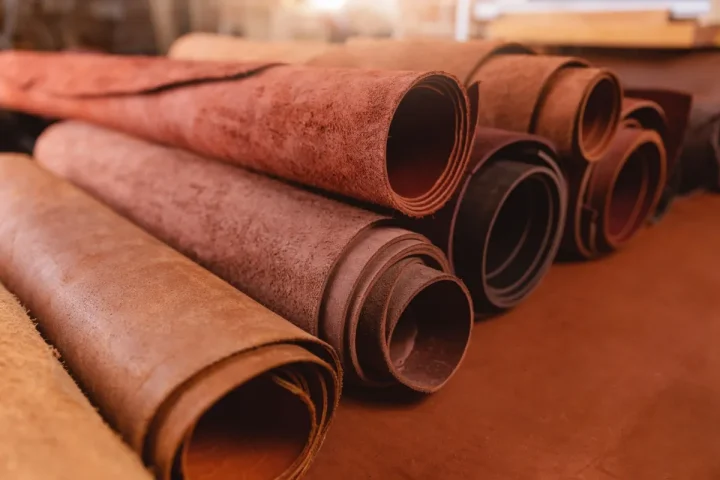
Up to 40% of the world’s hides and skins are wasted. At a time when plastics are choking ecosystems and entering our bloodstreams, this is not just an environmental loss — it’s a failure of imagination.
In 1990, virtually every hide and skin from the global meat industry was made into leather. Today, the Leather and Hide Council of America (LHCA) estimates that nearly two in five are discarded — buried or burned.
This waste coincides with the rise of plastic substitutes, marketed as modern and sometimes “eco-friendly”. Yet unlike leather, these synthetics are fossil fuel based, create products with short working lives that cannot be repaired and are difficult to collect and recycle. They shed microplastics that are appearing in human blood, lungs and even breast milk.
The world is waking up to the problem. But international negotiations in Geneva this year ended without the long hoped-for plastics treaty. If global action is out of reach, then it comes down to national and regional governments to lead.
I wrote recently that these two factors, plus the supply chain reorganisation initiated by the new U.S. trade policy, should become the pivotal moment for leather to fight back against plastics and get itself reinstated as the responsible material choice.
In response to my last Opinion piece, Greet Deloore-Lismont from Radermecker tannery in Belgium wrote the following powerful words online, for which I thank her:
“If there was ever a time when consumers might rise up against disposable plastics and rediscover the value of natural materials, it is now. They connect us to craft, culture and continuity. They are the antithesis of the disposable mindset that has dominated the past half-century.”
The leather industry must see this as a unique opportunity to start the battle for leather’s reinstatement and the removal of plastics. We must push governments to act against plastic materials while we double our efforts to ensure leather is seen by consumers, brands and governments in the correct light.
Plastics under pressure
Plastics were once hailed as cheap and versatile. Now, their hidden costs dominate the headlines. September 5 is “Plastic Overshoot Day”. This highlights the moment when annual global plastic waste outpaces systems’ ability to manage it. Only 9-12% of global plastic is recycled – and one wonders if that is not an overestimate when observing the rivers, lakes and estuaries choked in plastic bottles and other plastic litter.
We need to fight for:
– A ban on products with intentionally added microplastics.
– Labelling synthetic leather honestly as plastic.
– A tax on landfill and incineration of hides and plastics.
– The use of public procurement to prefer natural, biodegradable materials.
Other actions must follow as timing fits, such as the start of Extended Producer Responsibility (EPR) schemes for plastics and the introduction of a right to repair. Durability standards should be introduced or offered by the leather industry.
The Sustainable Leather Forum will be held on September 8 in Paris for its 7th year. France offers a good example of a leather industry that has unified vertically and horizontally and given itself the critical mass to address government and create a powerful image with consumers. It promotes best practice, and many participants do extensive work to support the artisan work that creates so many good jobs.
This gathering of industry leaders is designed to address issues such as water management, traceability, eco-design, and environmental and social responsibility across the leather value chain, as well as shine a light on the need to replace plastic. Delegates must use this key event and this moment to drive the need for responsible leather making and marketing across the world.
What comes from Paris, and the other upcoming events like ACLE and Lineapelle, cannot be for one region alone. Consumers can understand that every industry has one or two misbehaving companies, but the leather industry has too many. A new manifesto must fight for full commitment from around the world to get ESG practises up to scratch across the industry. Otherwise, what are our institutions for?
Time for tanners to sing in harmony
It is time to end using child labour and modern slavery; stopping greenwashing and ignoring waste management yet expecting others to promote leather and expand the market. Every trade association must commit to policing their industry to create one leather industry: not unison, but certainly harmony.
Leather needs to create some clear blue water between itself and plastics. It needs to start presenting powerful, clear data showing leather’s lower, long-term environmental and health impact. We must start regaining market share from synthetic alternatives now, by focusing on sustainability, innovation, craftsmanship, marketing and value addition. Consumers must desire leather for its performance, symbolism, authenticity, identity and history. It is considered by many consumers to be a premium, luxury good representing good taste and high value, while for others the fact that it avoids a waste of natural resources is just as important. This quality, heritage, craft and identity, along with leather’s aesthetic and sensory values, are totally out of reach for plastics.
Above all, leather must be seen as sustainable, honestly made and long lasting. Buying leather avoids waste, it does not create it. Buying leather helps biodiversity and the climate, it does not destroy it. Wearing and using leather helps boost self-esteem and joy of life.
The excitement in the electric vehicle sector in China has been driven by demanding consumers. Around the world, governments complain of subsidies and dumping. They may have a point and China has managed to create huge overcapacity, but in just ten years it has become the largest maker of cars, the largest purchaser of cars and the largest exporter of cars (if I have not quite got these stats right, they soon will be). One of the biggest pull factors here is an immense cohort of young men and women who are digitally skilled, so want cars to match, but are not well paid so need value for many. This is the audience that the Chinese automakers have successfully responded to, pushing out the combustion engine. Leather has such consumers around the world, but we must raise our heads and our ambitions and seek them out with great designs and wonderful leathers. Behave like a commodity and die like a commodity.
There is a realistic opportunity for leather to reclaim some of that lost 40%, especially if the plastic backlash, tariff policies and localisation trends continue to align. But it won’t happen automatically—there’s a need for coordinated effort across the supply chain to rebuild local processing and to position leather as a durable, healthy and responsible alternative to synthetics.
India needs to be a part of the movement
Think of how India’s leather sector has been cut adrift from its U.S. customers as a punishment for quite separate matters that the U.S. government do not like. It is a moment to rethink. If the leather sector modernises, doubles down on sustainability credentials, leverages heritage positioning and robustly markets these advantages, it can grow its market share and help increase the pie for all.
India is clearly at a crossroads. It has a big plastics industry and refuses to support the plastics treaty, arguing for a gentler approach. This only played into the hands of the top petrostates for whom endless delay is the foundation of their strategy. It gives more subsidies to plastics than leather. Yet the Indian consumer does not like all this waste and there are already some bans on single-use plastics, but this has not stopped synthetics flooding the markets and undermining healthy natural fibres such as khadi and leather. Moreover, given India’s huge problem with diabetes, there must be an urgent demand for orthopaedic and quality leather footwear for all. This is both a healthcare necessity and a potential growth segment for the Indian leather industry.
So, in tune with its Atmanirbhar Bharat “self-reliant India” vision, this is the moment for India to pivot and look to new markets both closer to and at home, curbing the market for cheap synthetic goods and promoting domestic consumption of natural materials. This would boost rural and artisanal economies, reduce plastic waste and health risks and demonstrate an exciting new model of sustainable consumption.
Industry leaders should consider pushing options that include tariffs on synthetic leather, national campaigns celebrating khadi and leather, and public procurement mandates for natural fibres. As with Chinese automobiles, leather should foster excitement and pull from consumers with great looks, performance and value.
Beyond India, leather should become a big story in a world seeking long-lasting, circular solutions.
The world cannot afford to waste 40% of its hides while drowning in plastics. Governments have the tools to act: bans, levies, tariffs, procurement rules and consumer education. The reward is two-fold: less plastic waste and fuller use of healthy, long-life natural products.
The opportunity is there for all governments. They must forget about adding leather into “catch all” legislation, but be persuaded that with leadership and smart policy, leather can once again be a symbol of durability, responsibility and natural value in a world turning away from plastic.

Michael Redwood
Leather chemist, writer, and advisor on responsible leather manufacturing and material strategy. This article was originally written for ILM.